
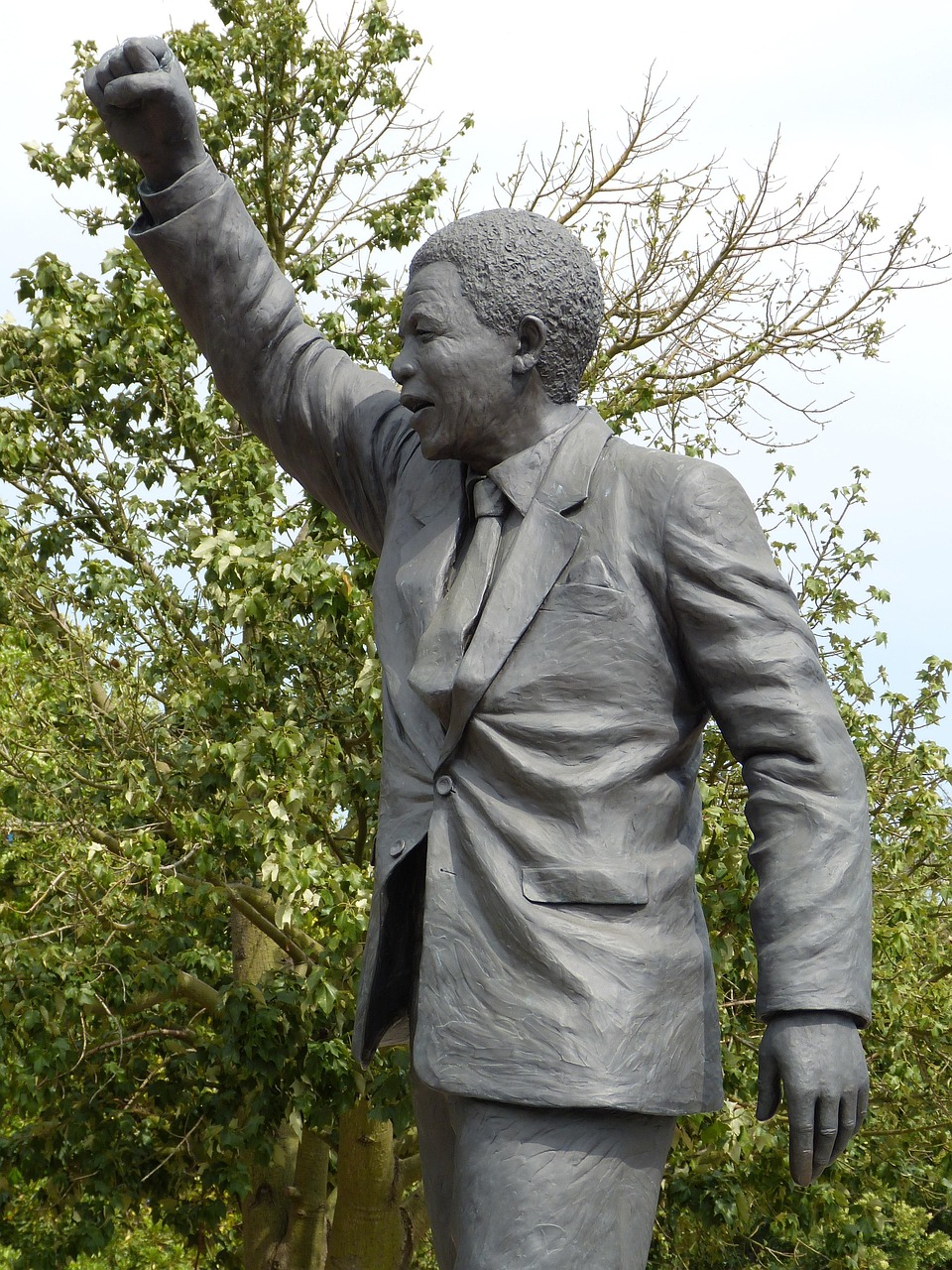
Release from Prison
On 12 August 1988, Nelson Mandela was taken to hospital, where he was diagnosed with tuberculosis. After spending more than three months in two separate hospitals, he was transferred on 7 December 1988 to a house within Victor Verster Prison near Paarl. Here, he spent his last 14 months of imprisonment before his release.
He was finally freed from the prison gates on Sunday, 11 February 1990, just nine days after the banning of both the African National Congress (ANC) and the PAC was lifted. His release came nearly four months after the remaining Rivonia trial comrades had been released. Throughout his long incarceration, Mandela had rejected at least three conditional offers of release offers that would have required him to accept limitations on his activism and movement.
After his release, Mandela immediately immersed himself in negotiations designed to dismantle white-minority rule in South Africa. In 1991, he was elected President of the ANC, succeeding his longtime comrade Oliver Tambo, who was ill. In 1993, he and President F. W. de Klerk were jointly awarded the Nobel Peace Prize for their efforts in navigating a peaceful transition from apartheid. Then, when the first multiracial elections were held, Mandela cast his first-ever vote on 27 April 1994.
(Source: Nelson Mandela Foundation “Biography” page)
Also Read: Top 20 Mega Development Projects Transforming Burkina Faso | Massive Projects
Presidency
On 10 May 1994, in a moment that many consider the culmination of his life’s struggle, Mandela was inaugurated as South Africa’s first democratically elected President. He led a government of national unity, committed to reconciling a deeply divided society. (See the entry on the Presidency of Nelson Mandela for more details.)
On his 80th birthday, in 1998, he married Graça Machel, becoming his third wife. True to his pledge not to cling to power, Mandela stepped down in 1999 after a single term as president. In his post-presidential life he remained active — founding and working with the Nelson Mandela Children’s Fund (established in 1995), the Nelson Mandela Foundation, and the Mandela Rhodes Foundation.
In April 2007, his grandson Mandla Mandela was installed as head of the Mvezo Traditional Council in a ceremony at the Mvezo Great Place, the ancestral village of the Mandela family.
Nelson Mandela never wavered in his devotion to democracy, equality, and education. Even under extreme provocation, he refused to respond to racism with more racism. His life continues to inspire oppressed communities worldwide, and all who stand against injustice.
He passed away at his home in Johannesburg on 5 December 2013.
(For more on his life and legacy, see his official biography on the Nobel Prize website.)
Also Read: Human Capital Investment’ The Future Of Africa
Additional Personal and Historical Notes
- Mandela’s father died in 1930, when Nelson was about 12 years old, and his mother died in 1968 while he was imprisoned. Some versions of his autobiography Long Walk to Freedom say his father died when Mandela was nine, but archival evidence and original manuscript versions support the 1930 date.
- Historical research has found that there were at least two other Black-owned law firms in South Africa before Mandela and Tambo established their practice a lesser-known fact in the biography of Nelson Mandela.
Broader Life Context (for a complete “Biography of Nelson Mandela”)
To place the above in context, here’s a more complete sketch of Mandela’s life:
- He was born 18 July 1918 in Mvezo, in the Eastern Cape, into the Madiba clan. ﴾See official Mandela Foundation bio﴿
- His Xhosa clan name was Rolihlahla, and later he adopted “Nelson” at school.
- He studied at Fort Hare University and later the University of the Witwatersrand, training as a lawyer.
- In 1944, he joined the ANC, helped found the ANC Youth League, and began organizing resistance to apartheid.
- Following the adoption of increasingly repressive apartheid laws, Mandela co-founded the armed wing Umkhonto we Sizwe in 1961. He was arrested in 1962, tried (in the Rivonia Trial), and sentenced to life imprisonment in 1964.
- He served most of his sentence at Robben Island, then in Pollsmoor, before being moved to Victor Verster.
- His 27 years of imprisonment made him a global symbol of resistance.
- After his release in 1990, he led South Africa’s transition into a multiracial democracy and became its first Black president in 1994.
- After his presidency, he continued to champion education, human rights, and reconciliation up until his death in 2013.