
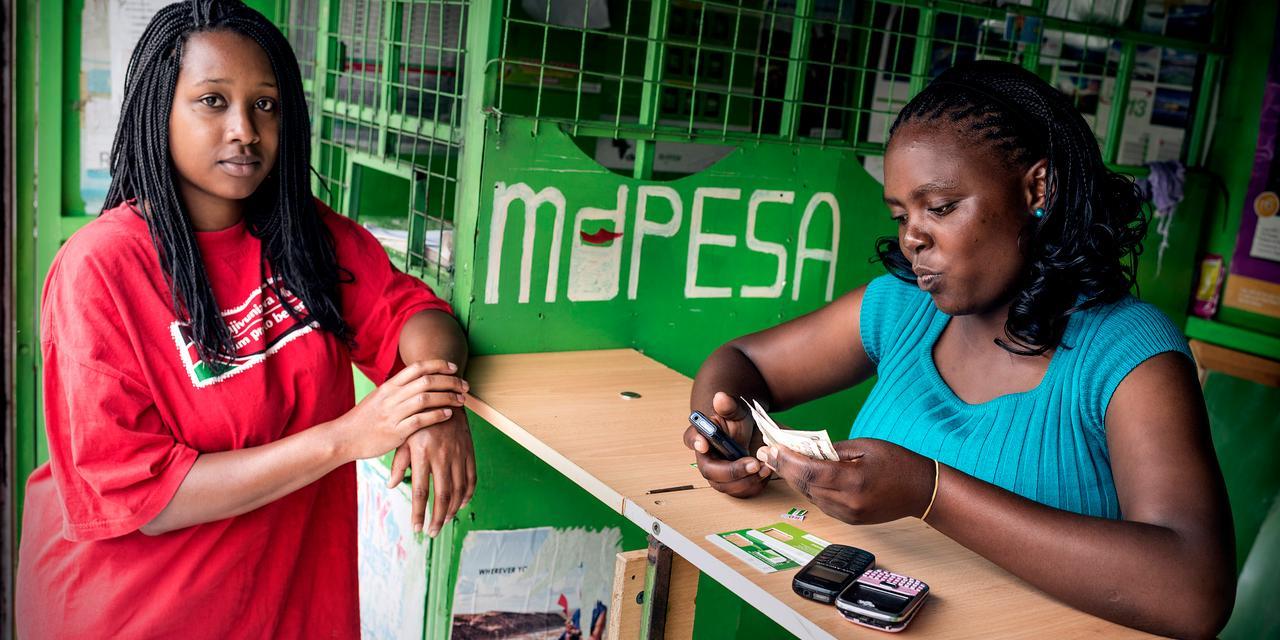
Africa has become the world’s most important region for mobile money. Millions of people use their phones to send money, pay bills, receive salaries, purchase goods and access financial services without visiting traditional bank branches.
From Kenya’s famous M-Pesa platform to Ghana’s widespread mobile money ecosystem and Senegal’s growing digital payment market, mobile money has transformed how people manage their finances.
The revolution extends beyond simple money transfers. Today, mobile wallets support merchant payments, international remittances, savings, credit and business transactions.
According to the GSMA State of the Industry Report on Mobile Money 2026, African mobile money services processed approximately $1.4 trillion in transactions during 2025. The continent recorded 1.2 billion registered accounts and 347 million active 30-day accounts.
These figures demonstrate the scale of the industry. However, registered accounts do not necessarily represent individual users because one person can own multiple wallets.
So, which African countries are leading the mobile money revolution? What makes their systems successful, and how does the continent compare in adoption, transaction activity and financial inclusion?
How Mobile Money Works
Mobile money allows people to store, send and receive money through mobile phones. Unlike traditional banking, users do not always need a conventional bank account. Instead, they can open electronic wallets through approved financial service providers and access services using mobile applications or USSD codes.
Customers can deposit cash through authorised agents, transfer funds to other users and withdraw money when necessary.
For example, a trader can receive payment from a customer through a mobile wallet without handling physical cash. Similarly, families can send money to relatives in rural communities within minutes.
This convenience has helped mobile money expand in regions where traditional banking infrastructure remains limited. The GSMA Mobile for Development programme examines how mobile technology can improve financial inclusion and expand access to essential services.
Africa’s Mobile Money Market in Numbers
The GSMA’s 2026 industry report provides a useful picture of Africa’s mobile money activity in 2025.
Africa’s Mobile Money Industry: Key Statistics for 2025
| Indicator | Africa, 2025 |
|---|---|
| Live mobile money services | 187 |
| Registered accounts | 1.2 billion |
| Active 30-day accounts | 347 million |
| Transaction volume | 92 billion |
| Transaction value | US$1.4 trillion |
| Share of global transaction volume | 74% |
| Share of global transaction value | 66% |
Source: GSMA, State of the Industry Report on Mobile Money 2026. Figures cover the African mobile money market in 2025.
Note: Registered accounts do not represent unique individuals, as one person may hold multiple mobile money accounts. Active 30-day accounts recorded activity within the previous 30 days.
Importantly, active accounts represent wallets that completed at least one transaction during the preceding 30 days. Therefore, they provide a better indication of regular usage than total registrations.
The growth of mobile payments also reflects the wider expansion of Africa’s leading computing and tech countries, where fintech companies and technology entrepreneurs are developing services for everyday consumers and businesses.
African Regions Leading the Mobile Money Revolution
Although individual countries have developed successful platforms, regional performance reveals where the largest transaction activity takes place.
The following figures compare the five African subregions in 2025.
| Rank | Region | Registered Accounts | Active Accounts | Transaction Volume | Transaction Value |
|---|---|---|---|---|---|
| 1 | East Africa | 537 million | 193 million | 61 billion | $806 billion |
| 2 | West Africa | 517 million | 104 million | 22 billion | $498 billion |
| 3 | Central Africa | 128 million | 39 million | 7 billion | $105 billion |
| 4 | North Africa | 30 million | 6 million | 491 million | $15 billion |
| 5 | Southern Africa | 33 million | 5 million | 662 million | $8 billion |
Source: GSMA State of the Industry Report on Mobile Money 2026. Figures rounded.
East Africa leads in both transaction volume and value. Meanwhile, West Africa has the largest number of registered accounts among the five subregions.
These differences show why registration numbers alone cannot determine which markets have the strongest mobile money ecosystems.
African Countries Leading Mobile Money Adoption
The World Bank’s Global Findex 2025 database provides an important measure of financial inclusion. Its survey data cover adults who reported using mobile money services during the preceding year in the 2024 reference period.
The following comparison highlights ten African countries with high mobile money usage.
| Rank | Country | Adults Using Mobile Money (%) |
|---|---|---|
| 1 | Kenya | 87.5% |
| 2 | Ghana | 78.3% |
| 3 | Zambia | 69.3% |
| 4 | Uganda | 67.7% |
| 5 | Senegal | 66.9% |
| 6 | Gabon | 61.6% |
| 7 | Cameroon | 55.1% |
| 8 | Lesotho | 53.5% |
| 9 | Côte d’Ivoire | 53.4% |
| 10 | Tanzania | 52.9% |
Source: World Bank Global Findex 2025, 2024 survey data. Percentages refer to adults using mobile money in the preceding year, not registered wallet accounts.
The World Bank Global Findex database provides internationally comparable information about financial account ownership, digital payments and the use of mobile money among adults.
1. Kenya: The Pioneer of Mobile Money
Kenya remains one of the world’s most recognised mobile money markets. Its success began with M-Pesa, launched by Safaricom in 2007. The service changed how people transferred money, particularly those living far from conventional banks.
Today, M-Pesa supports personal transfers, merchant payments, bill settlement and several financial services. Furthermore, Kenya’s extensive agent network allows customers to deposit and withdraw cash across urban and rural communities.
The country’s mobile money success also demonstrates how technology can address everyday economic challenges.
2. Ghana: A Major West African Leader
Ghana has developed one of Africa’s most active mobile money markets. Services offered by MTN Mobile Money, Telecel Cash and AT Money allow customers to transfer funds, pay merchants and settle bills.
The country has also strengthened interoperability, allowing customers to transfer money across different financial networks.
Consequently, mobile money has become an important part of everyday commerce. Ghana’s adoption rate of 78.3% places it second in the country comparison.
3. Zambia: Growing Digital Financial Inclusion
Zambia has expanded mobile money access through telecommunications operators and financial technology providers.
Mobile wallets help customers send money, pay bills and conduct transactions without relying entirely on conventional banking services.
In addition, agent networks have improved access in communities where bank branches are limited. Its 69.3% adoption rate places Zambia third in the comparison.
4. Uganda: Expanding Mobile Financial Services
Uganda has developed a competitive mobile money market. MTN MoMo and Airtel Money provide services that support personal transfers, merchant payments and bill settlement.
Mobile wallets also help households receive money from relatives and businesses manage daily payments. However, transaction costs, digital literacy and network reliability remain important issues.
5. Senegal: A Growing West African Digital Payments Market
Senegal has emerged as an important mobile money market in West Africa. Orange Money and Wave have helped expand access to digital payments through accessible wallet services and competitive pricing.
Customers use these platforms for transfers, purchases and everyday financial transactions.
Furthermore, the country’s growing digital financial ecosystem supports trade and business activity across the wider West African region.
The Major Mobile Money Companies Transforming Africa
Mobile money growth depends on more than national adoption rates. Financial service providers, telecommunications operators, banks and technology companies all contribute to the ecosystem.
Some of the most influential providers include:
Safaricom M-Pesa: A major force in Kenya and one of the world’s best-known mobile money platforms.
MTN MoMo: Operates across several African markets, particularly West and Central Africa.
Airtel Money: Provides mobile financial services in multiple African countries.
Orange Money: Has a strong presence in Francophone West and Central Africa.
Wave: Has expanded rapidly in West Africa through its mobile wallet and payment services.
Competition between these providers encourages innovation, expands agent networks and improves access to financial services.
Why Mobile Money Has Grown So Quickly in Africa
Several factors explain the continent’s rapid adoption.
Limited Access to Traditional Banking
Many communities historically lacked convenient access to bank branches.
Mobile money offered an alternative that required less physical infrastructure.
Widespread Mobile Phone Use
Mobile phones provide a practical way to deliver financial services across large geographical areas.
Even basic feature phones can support certain transactions through USSD technology. Continued improvements in Africa’s mobile internet connectivity will make it easier for customers to access financial applications, complete transactions and communicate with service providers.
Large Informal Economies
Small businesses, traders, transport operators and independent workers frequently handle daily payments.
Mobile wallets provide convenient cash alternatives.
Remittances and Family Transfers
Many households depend on financial support from relatives living in other cities or countries.
Mobile money makes domestic transfers faster and more accessible.
Growing Digital Commerce
The increasing number of internet users across Africa creates more opportunities for digital banking, online commerce, electronic payments and other financial technology services. Online shopping, digital subscriptions and electronic payments are increasing demand for mobile financial services.
Consequently, mobile money providers continue to expand their payment options.
Challenges Facing Africa’s Mobile Money Industry
Despite impressive growth, mobile money still faces several challenges.
Fraud and cybersecurity: Criminals use phishing, SIM swapping and fraudulent messages to steal customers’ money.
Transaction charges: Fees can discourage frequent transactions, particularly among low-income customers.
Network problems: Poor connectivity and electricity shortages can interrupt services.
Digital literacy: Some customers struggle to understand applications, security settings and electronic payment processes.
Multiple registrations: A person can own several wallets, so registered account totals may overstate the number of individual users.
Additionally, regulators must strengthen consumer protection and ensure that financial service providers maintain secure systems.
What Is Next for Mobile Money in Africa?
The next stage of growth will involve deeper integration with the wider financial system. Interoperability will allow customers to transfer money more easily between different providers and banks.
Furthermore, providers are expanding merchant payments, savings, insurance and responsible digital credit products. Artificial intelligence and improved fraud detection systems may also strengthen security.
Meanwhile, governments and regulators can encourage innovation by supporting competition, clear licensing rules and reliable digital infrastructure.
Conclusion: Africa Is Leading the Global Mobile Money Revolution
Africa’s mobile money industry has become one of the continent’s most important financial innovations.
Kenya, Ghana, Zambia, Uganda and Senegal demonstrate how accessible digital payments can transform financial inclusion.
At the regional level, East Africa leads transaction activity, while West Africa has the largest registered account base.
Nevertheless, the industry’s future depends on converting registrations into regular usage, reducing transaction costs and protecting customers against fraud.