
Introduction
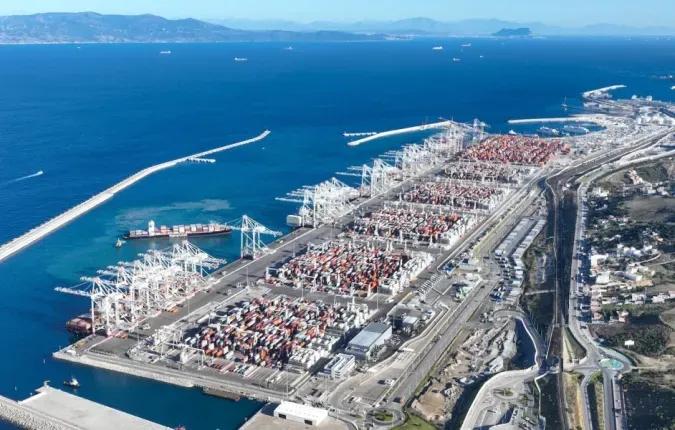
Africa’s seaports are among the most important gateways connecting the continent to the global economy. They support international trade, manufacturing, agriculture, energy exports and the movement of essential goods. Moreover, these ports serve as vital links between African economies and the global marketplace.
For example, from Morocco’s Tanger Med to Nigeria’s Apapa Port, these maritime facilities connect African businesses to markets across Europe, Asia, the Americas and the Middle East.
Meanwhile, their importance continues to grow as African countries invest in deeper shipping channels, modern container terminals, expanded cargo facilities and improved transport corridors.
As a result, seaports are becoming increasingly important to Africa’s economic development, regional integration and international competitiveness.
According to UNCTAD’s analysis of maritime transport in Africa, shipping and port infrastructure are important to the continent’s international trade and economic development.
However, not every busy port handles the same type of cargo. Some specialise in containers, while others move enormous quantities of crude oil, coal, minerals, agricultural products and petroleum.
Beyond maritime trade, Africa’s financial institutions also play an important role in supporting economic growth. Explore our ranking of Africa’s 30 largest banks in 2026 by total assets.
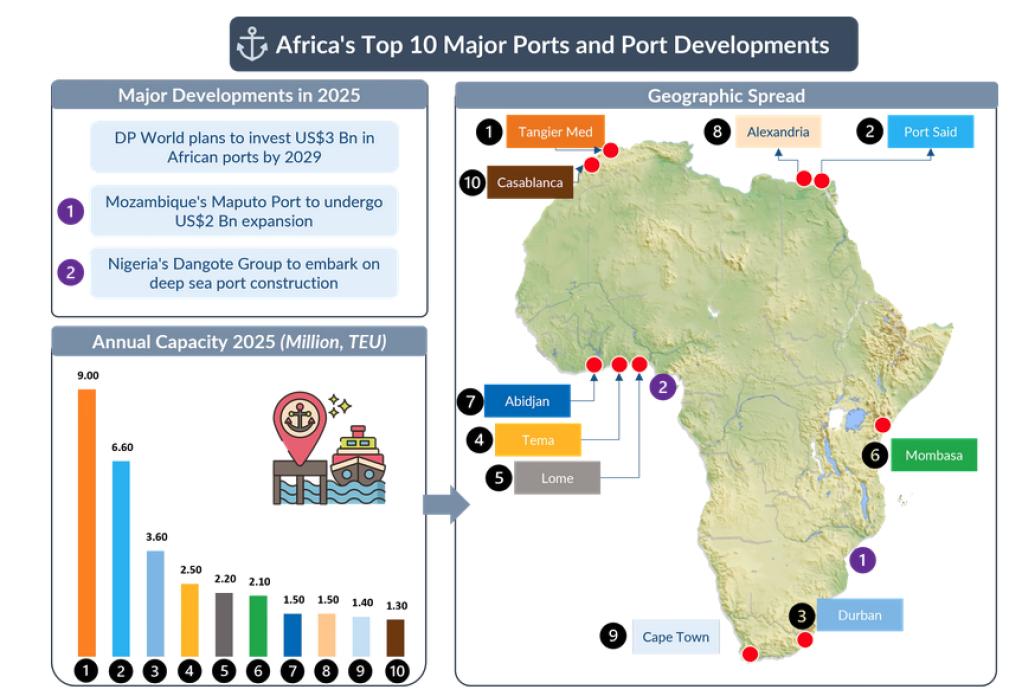
This ranking examines 20 major African seaports using container throughput as the principal comparison where figures are available, alongside total cargo tonnage to show their wider economic importance.
Africa’s 20 Busiest Seaports: The Ranking
The table combines reported 2025 figures where available with 2024 statistics for ports without comparable 2025 figures.
For broader comparisons of container traffic, the World Bank’s container port traffic database provides internationally comparable statistics on container transport measured in twenty-foot equivalent units (TEUs). The rankings below are an indicative editorial comparison, not a single-year audited league table.
| Rank | Seaport | Country | Container Traffic (TEUs) |
|---|---|---|---|
| 1 | Tanger Med | Morocco | 11,106,164 |
| 2 | Port Said | Egypt | 4,440,000 |
| 3 | Durban | South Africa | 2,750,000* |
| 4 | Alexandria | Egypt | 2,500,000* |
| 5 | Lomé | Togo | 2,400,000* |
| 6 | Tema | Ghana | 2,290,000 |
| 7 | Mombasa | Kenya | 2,110,000 |
| 8 | Damietta | Egypt | 1,800,000* |
| 9 | Abidjan | Côte d’Ivoire | 1,700,000 |
| 10 | Casablanca | Morocco | 1,130,000 |
| 11 | Djibouti | Djibouti | 1,310,000 |
| 12 | Ngqura | South Africa | 678,913 |
| 13 | Apapa | Nigeria | 800,943 |
| 14 | Cape Town | South Africa | 778,276 |
| 15 | Port Louis | Mauritius | 468,254 |
| 16 | Takoradi | Ghana | 32,000+ |
| 17 | Dar es Salaam | Tanzania | 985,000 |
| 18 | Dakar | Senegal | 881,239 |
| 19 | Algiers | Algeria | National figure: 1,830,000 |
| 20 | Pointe-Noire | Republic of the Congo | National figure: 1,050,000 |
Note: Figures combine different reporting years and some estimates. TEUs means twenty-foot equivalent units. National figures are not individual port totals. Asterisks indicate estimates.
Some lower entries use country-level container statistics or port-level figures from earlier reporting periods, so they should not be interpreted as independently verified individual-port rankings.
Apapa Port’s reported container traffic figure relates to 2025. However, the table is intended to provide a comparison of major African maritime gateways rather than a strict, like-for-like ranking of the continent’s top 20 ports.
Furthermore, the figures have been compiled from different reporting periods and sources, including port authorities, national transport agencies, the World Bank and published port-performance reports.
Therefore, readers should interpret the figures as an overview of reported port activity, taking note of the reporting year and source for each port.
1. Tanger Med, Morocco

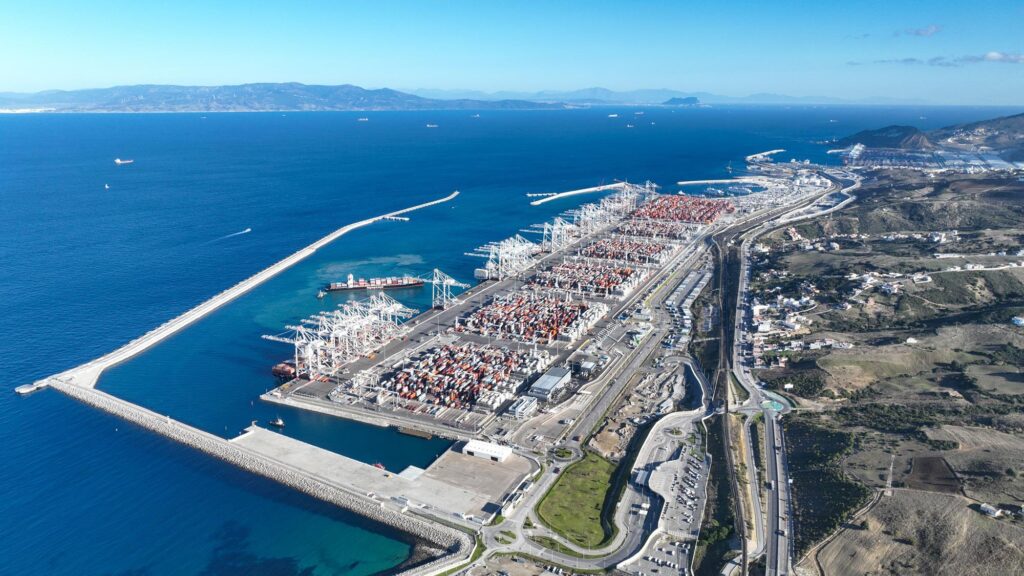
Tanger Med is Africa’s leading container port and one of the world’s most important maritime logistics hubs. Located near the Strait of Gibraltar, it provides direct access to shipping routes connecting Europe, Africa and Asia.
The port handled 11,106,164 TEUs in 2025, an increase of 8.4% over 2024. Its container terminals, industrial zones and logistics facilities have strengthened Morocco’s position in international trade.
The port’s performance is reflected in its official container activity and throughput statistics, which provide information about its growing role in international shipping. Beyond containers, Tanger Med also supports vehicle exports, hydrocarbons and general cargo.
2. Port Said, Egypt
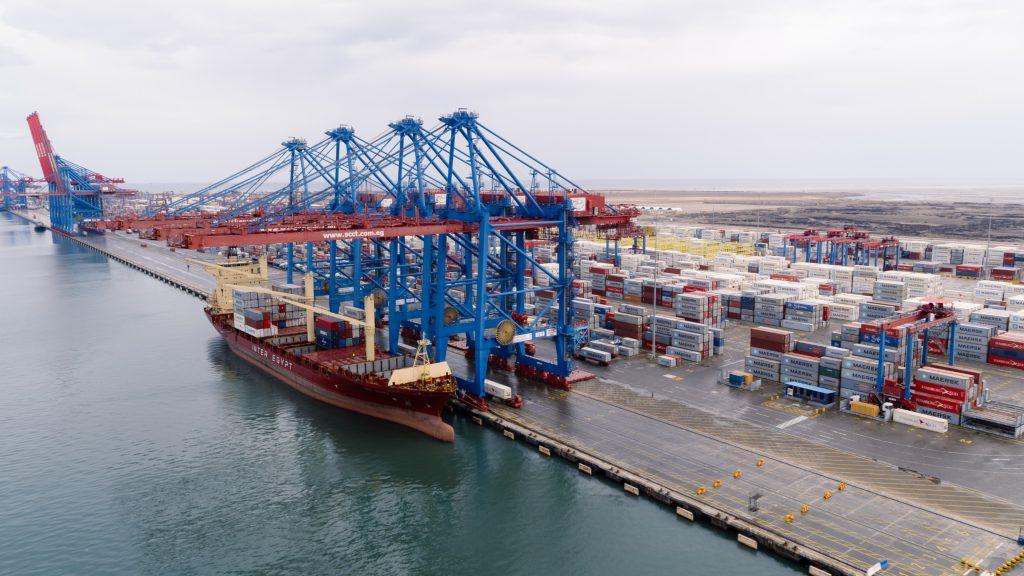
Port Said occupies a strategic position at the northern entrance to the Suez Canal, one of the world’s most important maritime trade routes.
Its location allows shipping companies to connect Asian, European and Mediterranean markets. The port handled approximately 4.44 million TEUs in 2025, reinforcing Egypt’s position as a major maritime power.
Its proximity to the Suez Canal gives it an advantage in transshipment and international container shipping.
3. Durban, South Africa
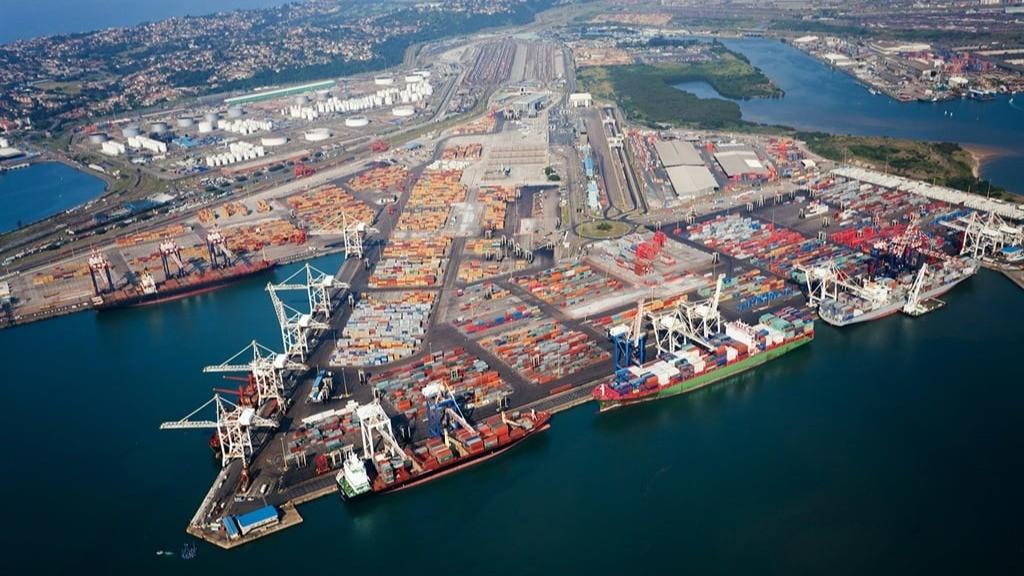
Durban is one of Southern Africa’s most important commercial ports. It handles imported consumer goods, machinery, vehicles, industrial materials and agricultural products.
The port processed approximately 2.75 million TEUs in 2025, although this figure is an estimate rather than a published annual total.
Its wider cargo operations are also significant. In 2024, Durban handled approximately 75.3 million tonnes of cargo, making it one of South Africa’s busiest general cargo gateways.
4. Alexandria, Egypt

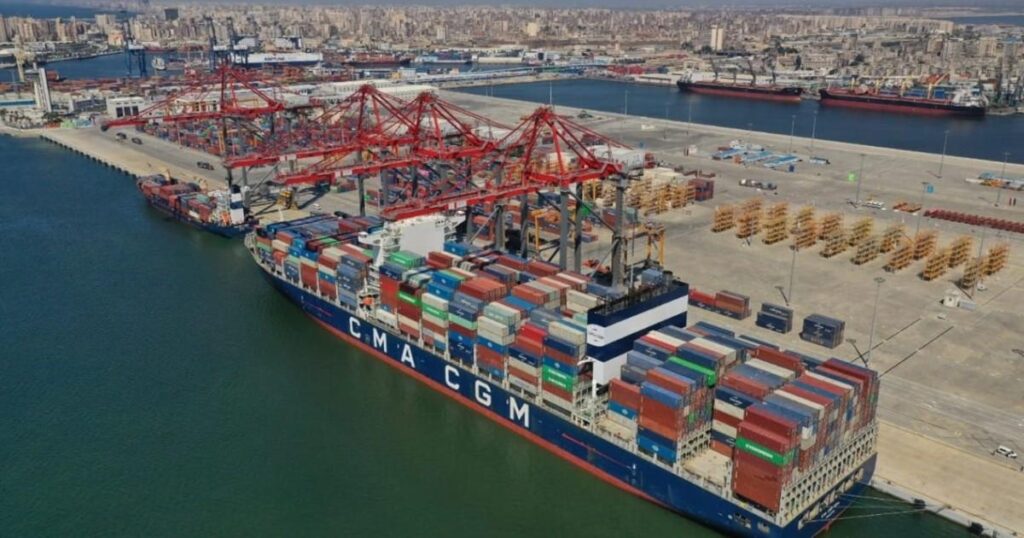
Alexandria is a historic Mediterranean trading centre and a major gateway for Egyptian imports and exports.
Its modern port facilities handle containers, agricultural commodities, industrial goods and general cargo.
The port recorded approximately 2.5 million TEUs in 2025, based on an estimate derived from its reported financial-year performance. Its expanding container infrastructure continues to strengthen Egypt’s Mediterranean shipping network.
5. Lomé, Togo

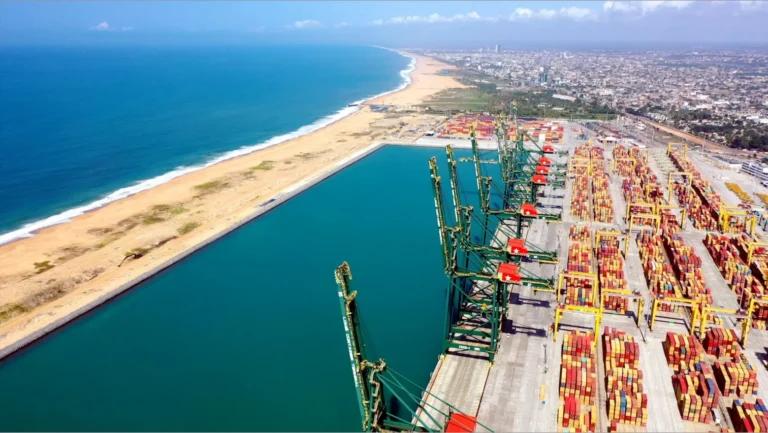
Lomé has developed into a major transhipment hub for West and Central Africa. Its deep-water facilities allow large container vessels to dock and transfer cargo to smaller ships serving neighbouring countries.
In 2024, the port handled 30.64 million tonnes of total cargo and approximately 2 million TEUs. Its 2025 container throughput is estimated at 2.4 million TEUs.
Its growth demonstrates the importance of regional logistics and transhipment services in African maritime trade.
6. Tema, Ghana
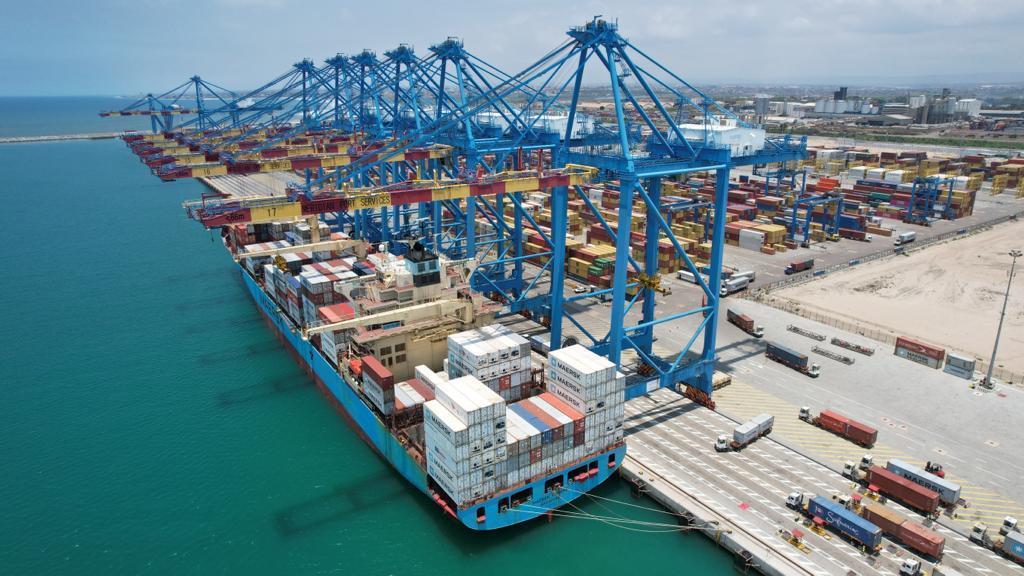
Tema is Ghana’s principal container gateway and an important logistics centre for landlocked countries in West Africa.
Ghana’s container traffic reached 1.70 million TEUs in 2024, with Tema accounting for the overwhelming majority. Its 2025 throughput rose to approximately 2.29 million TEUs.
The port’s expanded terminal facilities have helped accommodate larger vessels and increasing trade volumes.
7. Mombasa, Kenya
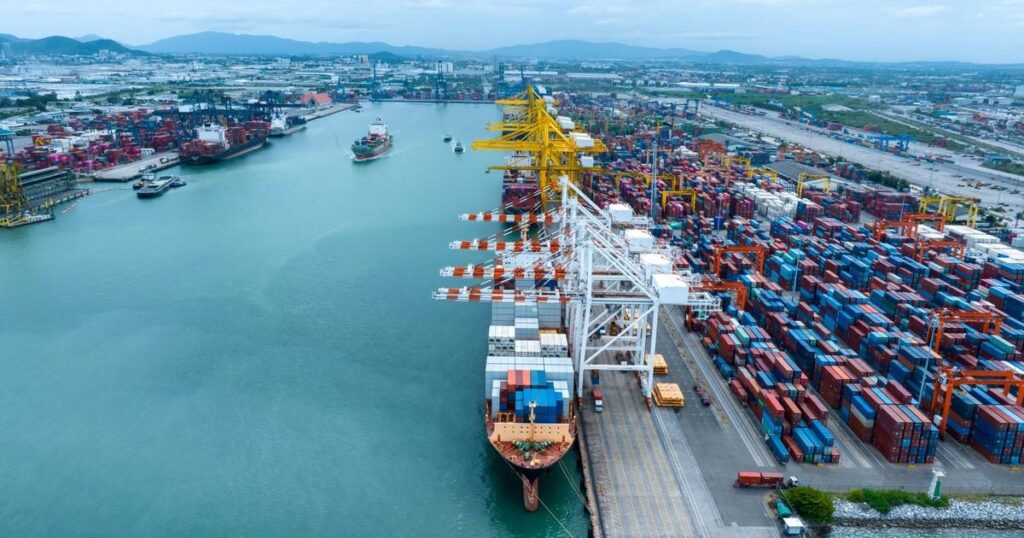
Mombasa is East Africa’s leading maritime gateway. It serves Kenya and landlocked neighbours such as Uganda, Rwanda, South Sudan and the Democratic Republic of the Congo.
In 2024, it handled 41.1 million tonnes of cargo and 2,005,076 TEUs. Its 2025 performance improved further, reaching 45.45 million tonnes and approximately 2.11 million TEUs.
The port’s growing transit trade makes it essential to regional economic integration.

Other Important African Maritime Gateways
8. Damietta, Egypt
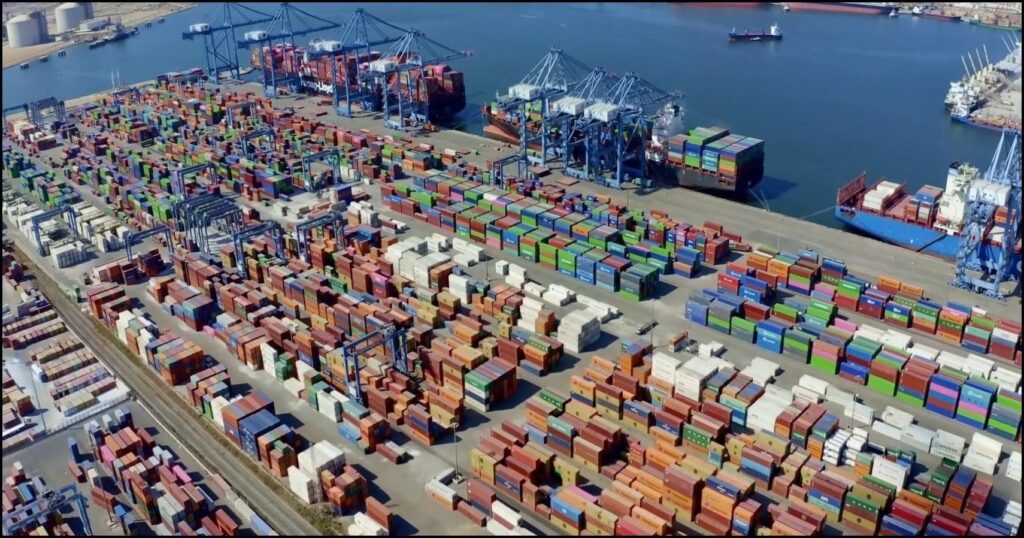
Damietta is an important Mediterranean port specialising in containerised cargo, grain and general merchandise.
Its modern facilities support Egypt’s international trade and provide additional capacity to the country’s maritime transport network. The port handled approximately 1.8 million TEUs in 2025, according to reported figures.
9. Abidjan, Côte d’Ivoire
Assessing 25 Years of Partnership between the AU and EU: From Strong Economic Ties to Mutually Beneficial Relations – Stiftung Wissenschaft und Politik
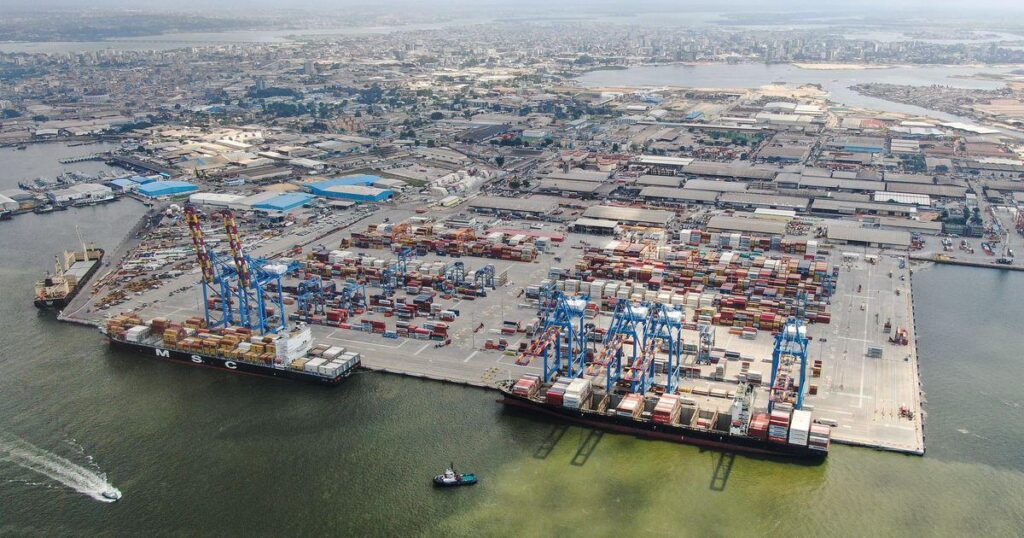
Abidjan is one of West Africa’s largest commercial ports. It serves Côte d’Ivoire and provides important transit connections to Burkina Faso, Mali and other neighbouring markets.
In 2024, it handled 40.1 million tonnes of cargo and 1.65 million TEUs. By 2025, total cargo had reached approximately 46.6 million tonnes, while container traffic increased to nearly 1.7 million TEUs.
10. Casablanca, Morocco
Casablanca remains a major centre for Moroccan maritime commerce. Its port supports imports of industrial equipment, consumer goods and agricultural products, alongside exports from the country’s manufacturing sector.
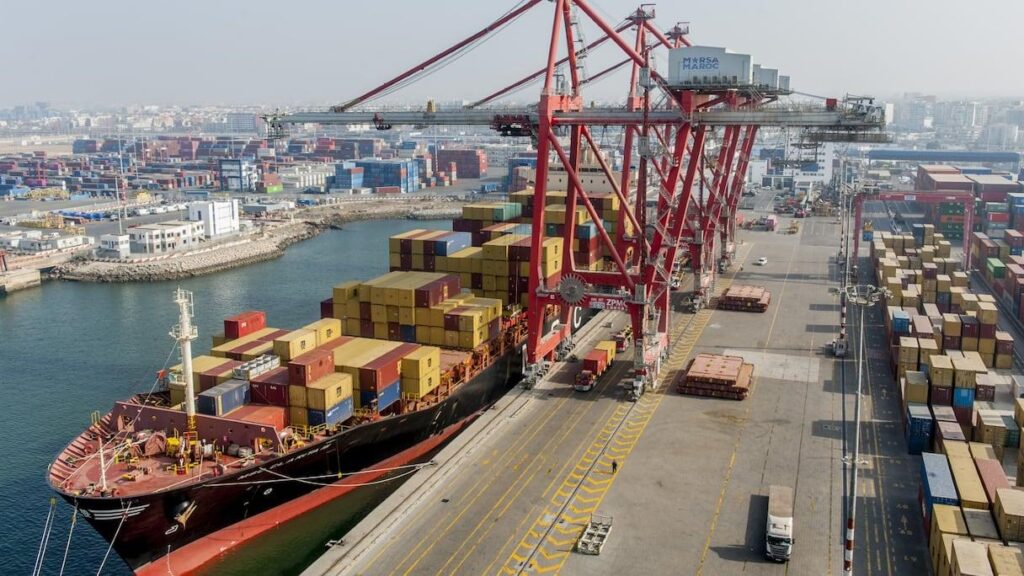
Its container throughput reached approximately 1.13 million TEUs in 2025, demonstrating Morocco’s strong maritime presence beyond Tanger Med.
11. Djibouti Port, Djibouti
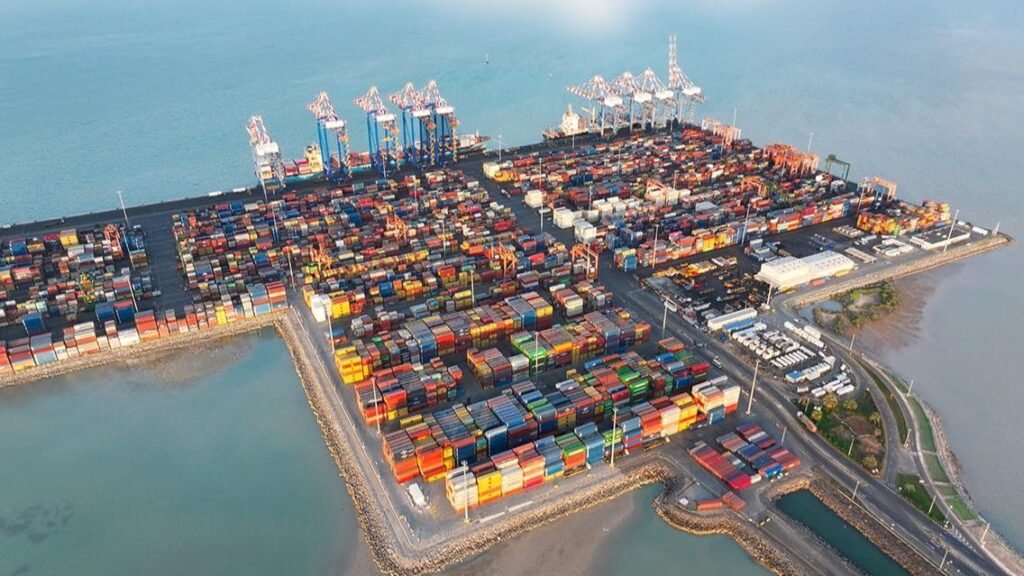
Djibouti occupies a strategic position near the Bab el-Mandeb Strait, linking the Red Sea with the Gulf of Aden. As a result, its location makes it an important hub for international shipping.
Furthermore, its port facilities provide an essential gateway for Ethiopia, a landlocked country with significant import and export requirements.
In addition, the Doraleh container terminal handled approximately 1.31 million TEUs in 2024, supported by transhipment and regional trade. Consequently, Djibouti continues to play a vital role in connecting East African markets to global shipping routes.
12. Ngqura Port, South Africa
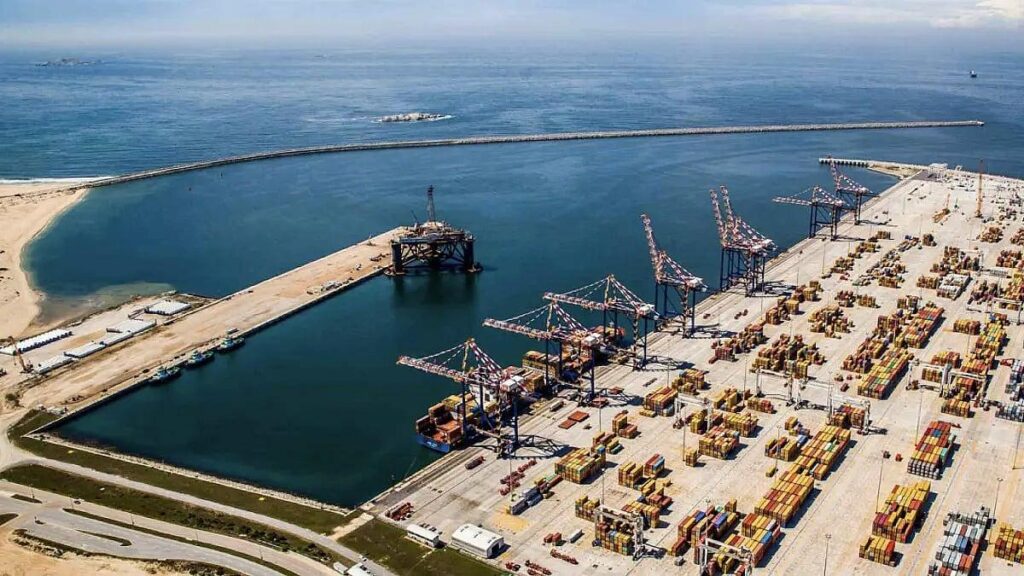
Located near Gqeberha in the Eastern Cape, Ngqura is a deep-water port designed to support container shipping and industrial development. Furthermore, its modern infrastructure strengthens South Africa’s capacity to handle international cargo.
In 2024, the port handled 678,913 TEUs, highlighting its contribution to the country’s container trade. In addition, its strategic location makes it an important part of South Africa’s maritime logistics network.
Consequently, Ngqura continues to support regional connectivity, industrial activity and international shipping.
13. Apapa Port, Nigeria
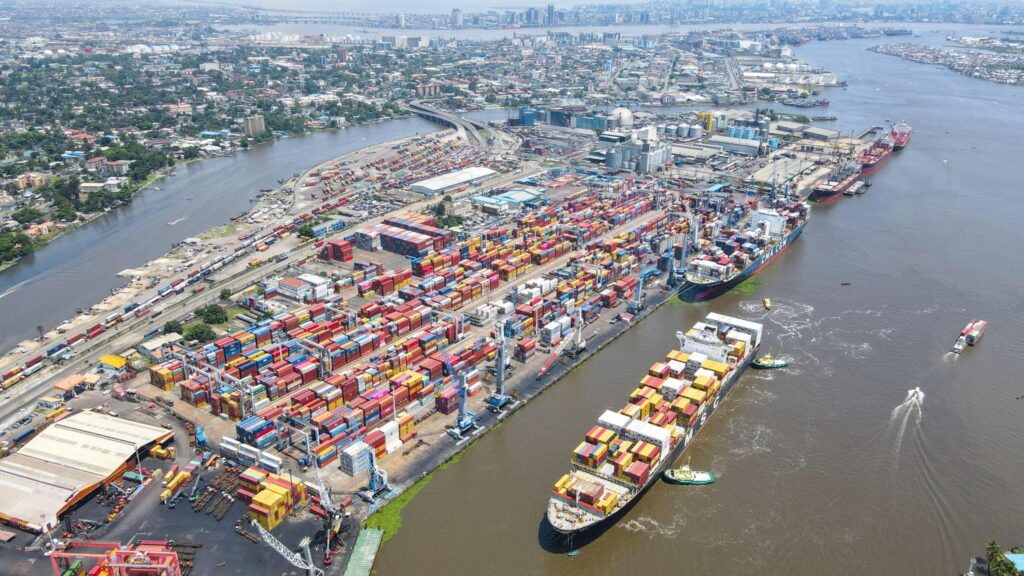
Apapa is one of Nigeria’s most important commercial ports and a major gateway for imported goods.
Located in Lagos, it handles machinery, food products, vehicles, industrial materials and other merchandise.
The port processed 800,943 TEUs in 2025, according to published reporting. Its importance to Nigeria’s economy makes improvements in road access, customs operations and terminal efficiency particularly significant.
14. Cape Town Port, South Africa
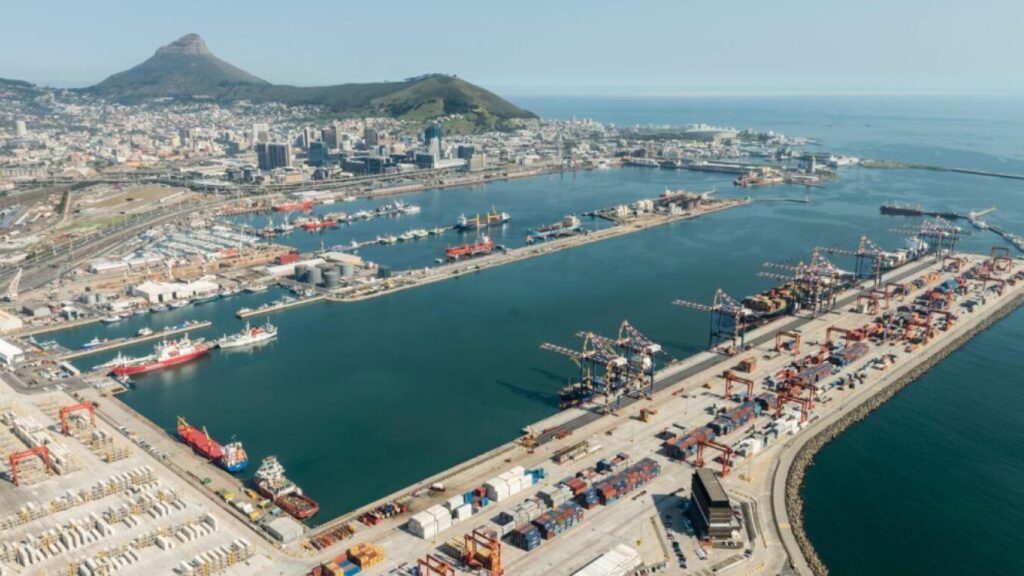
Cape Town handles containers, agricultural exports, refrigerated products and general cargo.
Its location along major maritime routes makes it important for South African exports, particularly fruit and other perishable products.
The port handled 778,276 TEUs in 2024. It also plays an important role in the country’s fishing, agricultural and tourism industries.
15. Port Louis, Mauritius
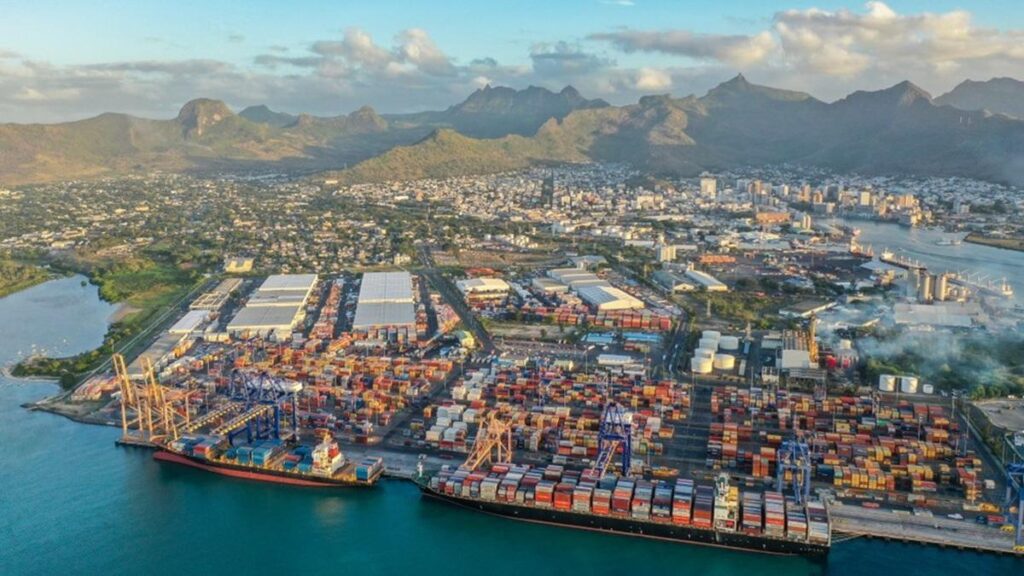
Port Louis is the main maritime gateway for Mauritius, an island economy that depends heavily on international shipping. As a result, the port plays a vital role in supporting the country’s economy.
Furthermore, it handles containers, petroleum products, food imports and other essential commodities. In addition, its reported national container traffic reached approximately 468,254 TEUs in 2024.
16. Takoradi Port, Ghana
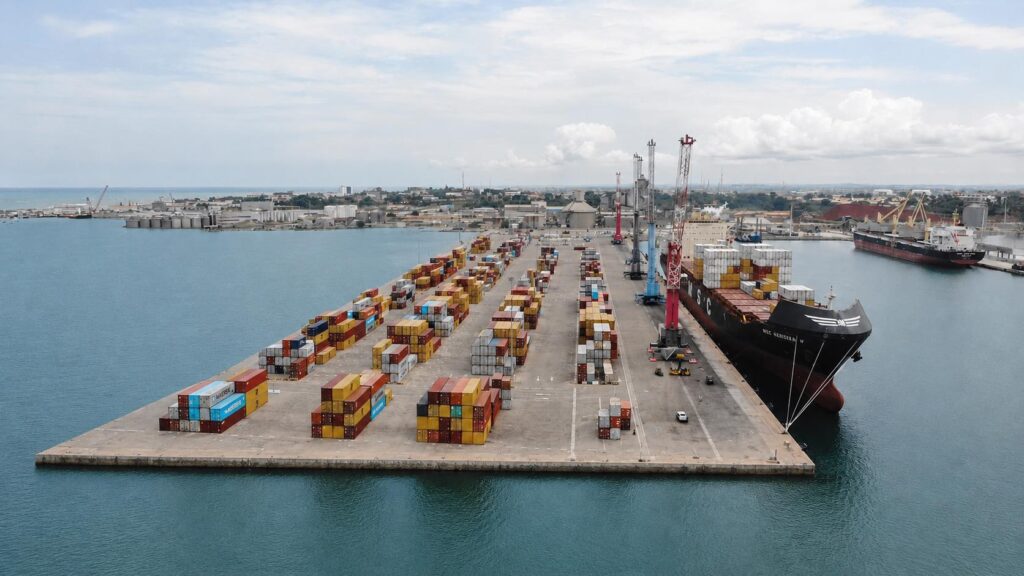
Takoradi complements Tema by supporting Ghana’s bulk cargo, mining, energy and offshore petroleum industries.
Its facilities handle minerals, particularly bauxite and manganese, as well as oil and gas-related cargo. Ghana’s reported container statistics recorded slightly more than 32,000 TEUs at Takoradi in 2024. Its importance extends beyond container shipping.
17. Dar es Salaam Port, Tanzania
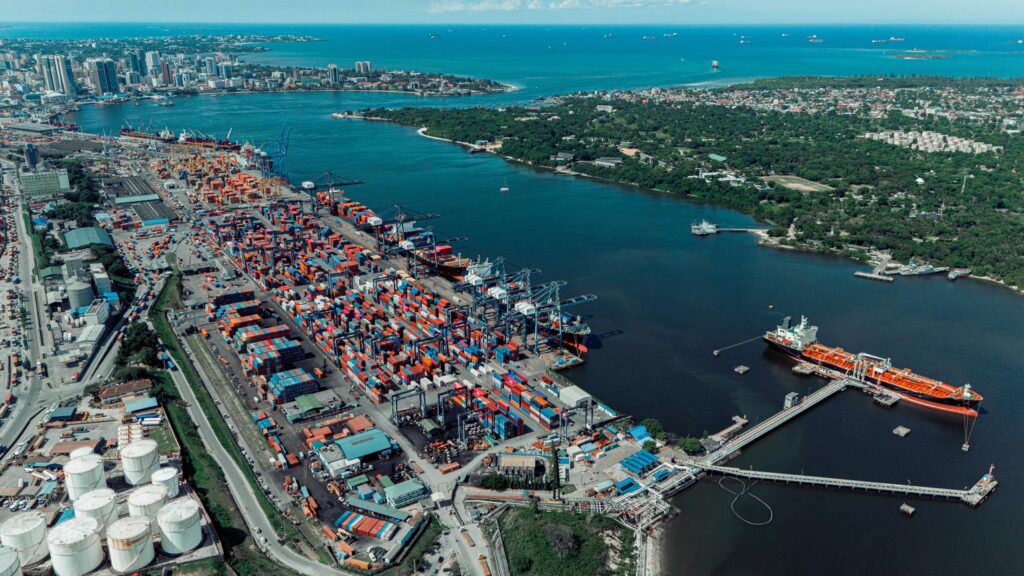
Dar es Salaam is one of East Africa’s most important ports. It serves Tanzania and landlocked neighbouring countries, including Zambia, Malawi, Burundi and the Democratic Republic of the Congo.
The port handled approximately 985,000 TEUs in 2024, according to World Bank container traffic statistics for Tanzania. Expansion and modernisation projects aim to improve its ability to handle growing regional trade.
18. Dakar Port, Senegal

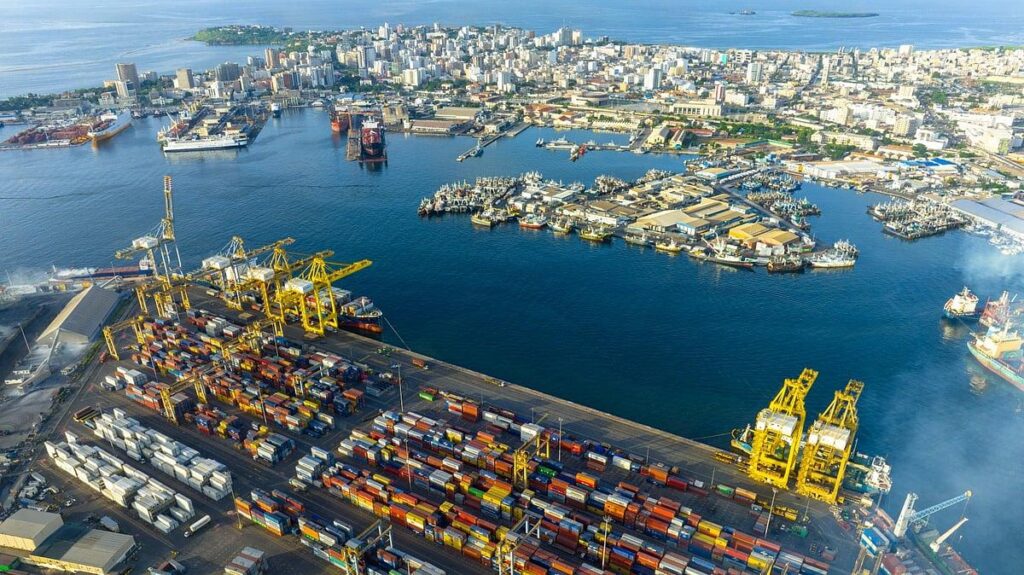
Dakar’s port benefits from its position on the westernmost point of mainland Africa.
It supports Senegal’s imports and exports while serving as an important maritime connection for Mali and other regional markets.
Its container traffic reached approximately 881,239 TEUs in 2024, according to national container port traffic data.
19. Port of Algiers, Algeria
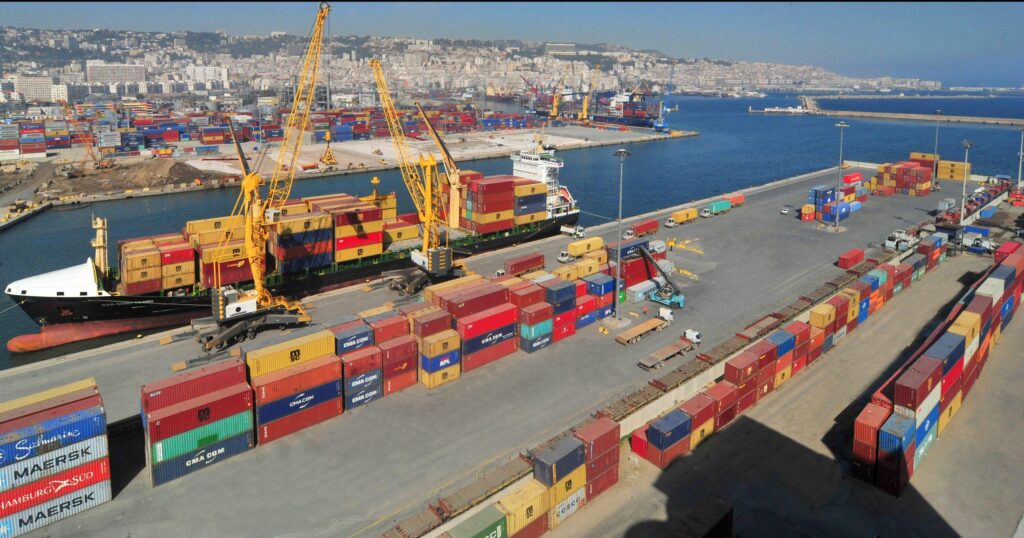
Algiers is an important Mediterranean gateway for Algeria’s international commerce.
The port handles manufactured products, machinery, food imports and general cargo. Algeria recorded approximately 1.83 million TEUs in national container port traffic in 2024, although this figure covers the country’s ports collectively rather than Algiers alone.
20. Pointe-Noire Port, Republic of the Congo
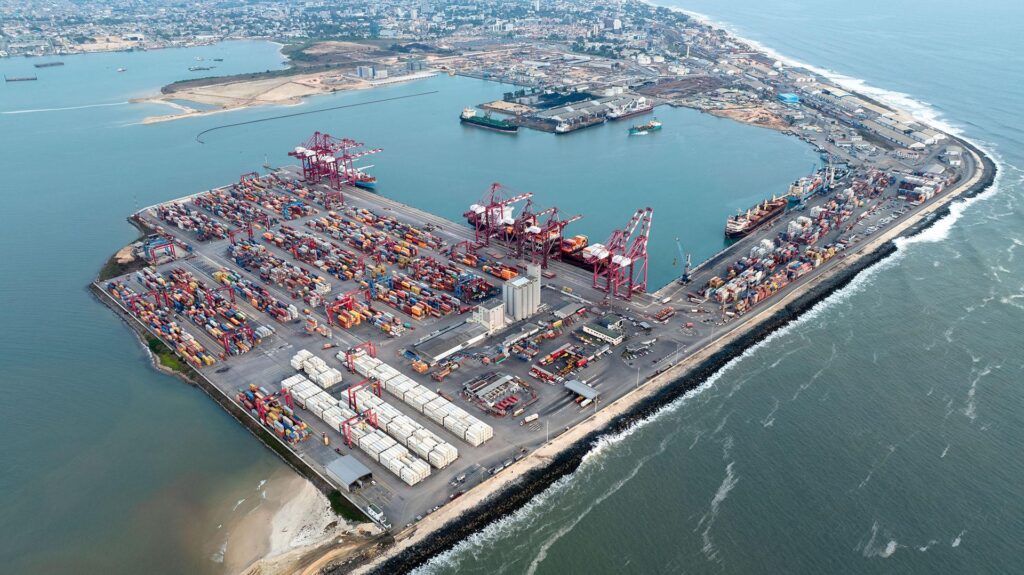
Pointe-Noire is a major deep-water port serving the Republic of the Congo and parts of Central Africa. As a result, it plays an important role in connecting the country to international maritime trade.
Furthermore, it supports petroleum-related trade, container shipping and regional logistics. In particular, the port provides an important connection to the country’s oil-producing economy.
The Republic of the Congo recorded approximately 1.05 million TEUs in national container port traffic in 2024. However, this is a country-level figure rather than a separately verified throughput figure for Pointe-Noire. Therefore, it should be treated as national context, not as the port’s individual container traffic.
Why African Seaports Matter to Economic Growth
Africa’s maritime infrastructure plays a major role in determining how efficiently businesses import raw materials and export finished products.
Several factors explain why these ports are becoming increasingly important.
- International trade: Seaports connect African producers to international customers and give businesses access to global supply chains.
- Industrial development: Modern port facilities support manufacturing, mining, agriculture, petroleum and other productive industries.
- Regional integration: Ports such as Mombasa, Dar es Salaam, Abidjan and Djibouti provide essential transport links for landlocked countries.
- Employment opportunities: Port operations create jobs in shipping, warehousing, customs, logistics, construction and transportation. Furthermore, these activities create additional employment opportunities in businesses that support the maritime industry.
- Foreign investment: Efficient maritime infrastructure attracts shipping companies, terminal operators, manufacturers and international investors. As a result, well-developed ports can strengthen investor confidence and encourage further economic development.
Major ports also support the growth of surrounding cities by creating jobs, attracting businesses and encouraging infrastructure development. See our ranking of Africa’s best cities for quality of life in 2026.
The Future of Maritime Trade in Africa
The future of African maritime commerce will depend heavily on infrastructure investment, digitalisation and regional cooperation.
Projects such as expanded container terminals, deeper shipping channels, modern cargo-handling equipment and improved road and rail connections can help reduce delays and transportation costs.
The African Continental Free Trade Area also creates opportunities for stronger regional trade. However, achieving these benefits requires efficient customs procedures, reliable transport networks and competitive port services.
Morocco, Egypt, South Africa, Kenya, Nigeria and other countries will continue to play important roles in shaping the continent’s maritime future.
Conclusion
Africa’s busiest seaports are more than shipping facilities. They are economic gateways that support international commerce, industrial development and regional connectivity.
Tanger Med leads the continent in container handling, while Port Said, Durban, Lomé, Tema and Mombasa demonstrate the growing importance of modern maritime infrastructure.
As African economies expand, investment in efficient ports will remain essential to improving trade competitiveness and strengthening the continent’s position in the global economy.
Furthermore, modern maritime infrastructure can attract investment, improve supply chains and support regional integration.
At the same time, financial institutions will remain important to funding trade, infrastructure development and business expansion across the continent. Ultimately, stronger ports and financial systems can work together to support Africa’s long-term economic growth. Read more about Africa’s biggest banks by assets.