
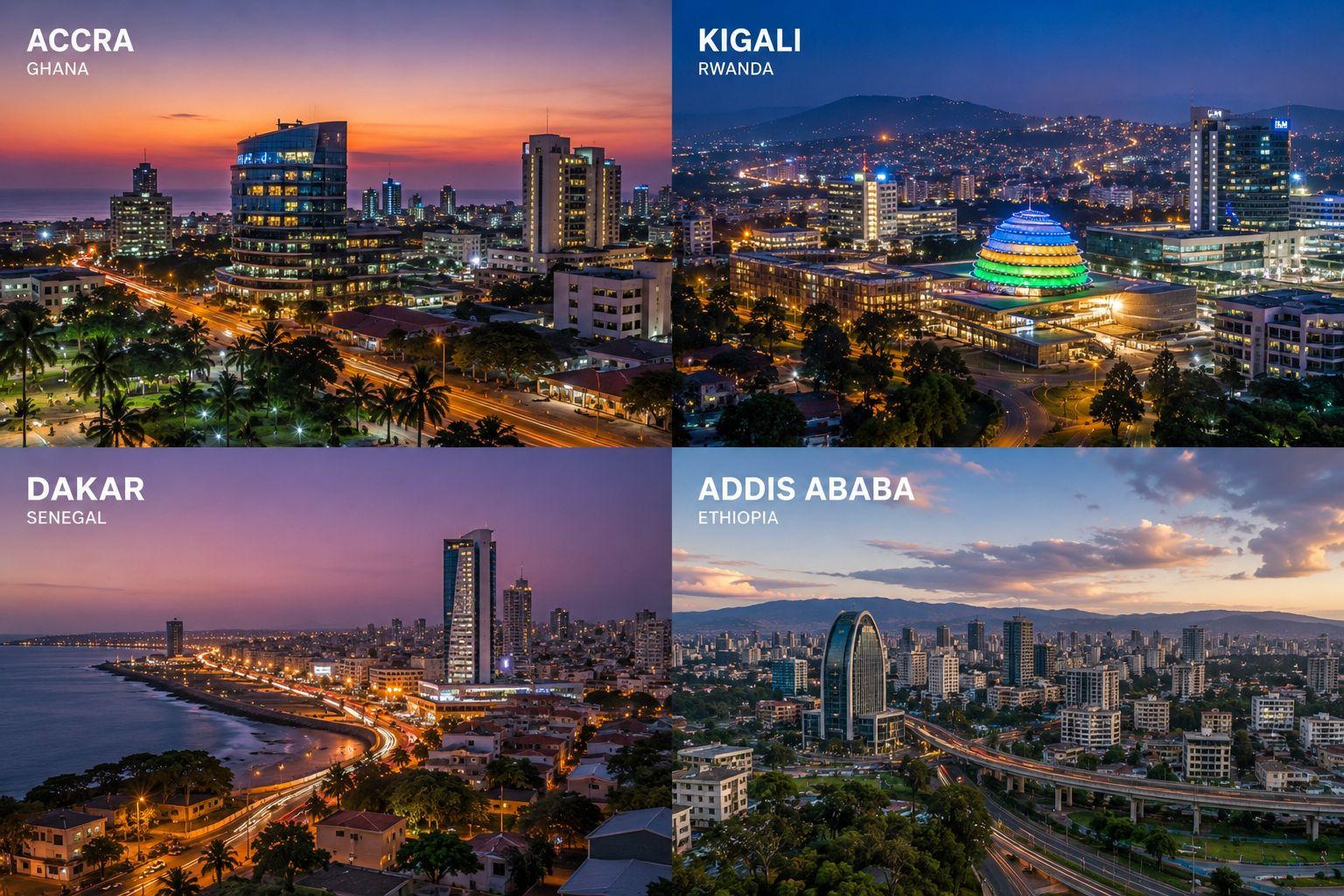
What makes an African city a great place to live?
How does the Global Cities Index measure quality of life. For many people, the answer goes beyond a good salary. Access to healthcare, personal safety, affordable housing, reliable transport, a clean environment and opportunities for work all influence how people experience urban life.
Across Africa, cities are growing rapidly as populations increase, businesses expand, and more people move to urban areas. Some cities offer relatively strong healthcare systems and favourable climates, while others stand out for their business opportunities, cultural attractions or improving infrastructure.
But which African cities offer the best quality of life in 2026?
Data from Numbeo’s 2026 Quality of Life Index provides a useful starting point for comparing cities across the continent. Its indicators include purchasing power, safety, healthcare, cost of living, property prices, commuting, pollution and climate.
The figures reveal a strong showing from South African cities, alongside opportunities and challenges in other parts of Africa.
Africa’s Best Cities for Quality of Life in 2026
The following table presents selected African cities and their reported Quality of Life Index scores for 2026. Higher scores indicate stronger overall results within this index.
| Rank | City | Country | Quality of Life Index (2026) |
|---|---|---|---|
| 1 | Port Elizabeth (Gqeberha) | South Africa | 161.9 |
| 2 | Cape Town | South Africa | 160.4 |
| 3 | Windhoek | Namibia | 157.8 |
| 4 | Durban | South Africa | 151.8 |
| 5 | Pretoria | South Africa | 143.5 |
| 6 | Johannesburg | South Africa | 140.5 |
| 7 | Tunis | Tunisia | 109.9 |
| 8 | Nairobi | Kenya | 95.5 |
| 9 | Casablanca | Morocco | 95.4 |
| 10 | Alexandria | Egypt | 88.2 |
Source: Numbeo Quality of Life Index by City, 2026. Scores are index values, not percentages. Rankings and scores may change as the underlying data is updated.
1. Port Elizabeth (Gqeberha), South Africa
Port Elizabeth, officially known as Gqeberha, takes the top position in this selected 2026 comparison, with a Quality of Life Index score of 161.9.
Located along South Africa’s Eastern Cape coastline, the city offers access to beaches, outdoor recreation and a relatively relaxed coastal lifestyle. Its climate and natural surroundings appeal to residents who value outdoor activities and proximity to the sea.
The city also benefits from its established urban services and industrial base. However, employment opportunities, infrastructure maintenance and access to reliable public services remain important considerations for residents.
Its leading score does not mean that every neighbourhood offers the same standard of living. Individual experiences can differ considerably depending on income, housing and access to services.
2. Cape Town, South Africa
Cape Town records a score of 160.4, placing it among Africa’s strongest-performing cities for quality of life.
The city is internationally known for Table Mountain, its beaches, cultural attractions and scenic coastal setting. It also has established tourism, finance, technology and professional services sectors that create opportunities for workers and businesses.
Cape Town performs particularly well in the 2026 comparison for healthcare and climate-related indicators. Its natural environment also provides opportunities for hiking, cycling and other outdoor activities.
However, housing affordability and inequality remain significant challenges. The cost of living can be high in sought-after neighbourhoods, and access to employment, transport and public services varies across the metropolitan area.
3. Windhoek, Namibia
Namibia’s capital, Windhoek, achieves a Quality of Life Index score of 157.8.
Windhoek combines a relatively compact urban environment with access to the country’s distinctive landscapes. Its role as Namibia’s administrative and commercial centre supports employment in government, services, trade and other industries.
The city also benefits from a generally dry climate and an established urban infrastructure network.
Nevertheless, affordability, income differences, water management and access to employment remain important issues. As in other African capitals, the quality of life residents experience depends partly on their income and neighbourhood.
4. Durban, South Africa
Durban ranks fourth, with a score of 151.8. Its coastal location, warm climate and major port make it an important centre for tourism, trade and logistics.
The city offers beaches, cultural attractions and access to outdoor recreation. Its port also supports economic activity and employment across transport, manufacturing and related industries.
Durban’s relatively strong index score reflects a combination of lifestyle and urban factors. However, traffic in busy areas, infrastructure pressures, pollution and unequal access to services can affect daily life.
Investment in transport, drainage, public facilities and economic development will remain important for improving living conditions across the city.
5. Pretoria, South Africa
Pretoria records a score of 143.5 and benefits from its role as one of South Africa’s principal administrative centres.
The city has government institutions, universities, research organisations and business districts that support employment and education. Its residential areas also offer a variety of housing options and access to green spaces.
Compared with larger commercial centres, some parts of Pretoria can offer a different pace of urban living. However, commuting distances, transport costs, personal safety and infrastructure reliability remain relevant considerations for residents.
The city’s long-term quality of life will depend partly on how effectively urban planning keeps pace with population growth.
6. Johannesburg, South Africa
Johannesburg scores 140.5, placing it sixth in this comparison. As South Africa’s largest economic hub, it offers extensive opportunities in finance, business services, technology, retail and entrepreneurship.
The city attracts workers and investors because of its concentration of companies, commercial districts and professional networks. It also has universities, entertainment venues and a diverse cultural scene.
Yet Johannesburg faces substantial urban challenges, including crime concerns, traffic congestion, pollution and uneven municipal services. Housing costs also vary considerably between neighbourhoods.
For many residents, the city offers strong career prospects, but the benefits must be weighed against the practical costs and challenges of urban living.
7. Tunis, Tunisia
Tunis, the capital of Tunisia, records a score of 109.9.
The city combines historical architecture, Mediterranean influences and established public institutions with a diverse economy. Its position as a national administrative and commercial centre supports employment in services, trade, education and other sectors.
Tunis also offers access to cultural attractions and coastal destinations. However, employment prospects, purchasing power, public transport and economic conditions can affect how comfortably residents live.
The city’s performance highlights the importance of considering both lifestyle and economic realities when comparing urban environments.
8. Nairobi, Kenya
Nairobi scores 95.5 and is one of East Africa’s most important economic centres.
Kenya’s capital has a growing technology sector, financial services industry and international business community. It is also a regional hub for organisations operating across East and Central Africa.
These advantages create opportunities for skilled workers, entrepreneurs and businesses. Nairobi’s restaurants, cultural venues and green spaces add to its appeal.
At the same time, traffic congestion, air pollution, housing costs in popular districts and unequal access to public services remain concerns. The city’s ability to expand reliable infrastructure will be important as its population and economy continue to grow.
9. Casablanca, Morocco
Casablanca records a score of 95.4 and is Morocco’s leading commercial and financial centre.
Its economy includes banking, manufacturing, logistics, trade and professional services. The city also benefits from major transport connections and access to Atlantic coastal areas.
For residents seeking employment in business and industry, Casablanca offers a broad range of opportunities. However, congestion, housing affordability and pollution can affect daily life.
Continued investment in public transport, urban planning and environmental management could help improve the experience of living and working in the city.
10. Alexandria, Egypt
Alexandria rounds out this selection with a score of 88.2.
Located along Egypt’s Mediterranean coast, Alexandria has a long history as a centre of commerce, education and culture. Its port, industrial activity and universities contribute to its economic importance.
The city offers coastal attractions and a distinctive cultural identity. However, population density, traffic, pollution and pressure on urban infrastructure present challenges.
Improving public services and maintaining the city’s historic and coastal environment will be important for its future development.

What Determines Quality of Life in African Cities?
A city’s quality of life depends on several connected factors.
Safety and security: Residents need to feel safe at home, at work and when travelling. Crime levels and the reliability of emergency services can strongly influence daily life.
Healthcare and education: Education and skills development are also important to urban growth. Access to medical services, schools, universities and professional training helps people maintain their wellbeing and improve their prospects.
Explore our report on Africa’s leading universities in 2027 to learn more about the continent’s higher education landscape.
Housing and affordability: High salaries do not necessarily translate into comfortable living if rent, transport and essential services consume a large share of household income.
Transport and infrastructure: Pedestrian infrastructure is another important part of urban life. Reliable roads, public transport, electricity, water and sanitation make it easier for people to work, study and access services.
Our guide to Africa’s most walkable cities explores historic districts, pedestrian-friendly neighbourhoods and the challenges of getting around on foot.
Environment and climate: Pollution, green spaces, air quality, heat and access to recreation all contribute to how residents experience their cities.
These factors interact differently in every location. A city with strong employment opportunities may still struggle with expensive housing, while a smaller city may offer a more relaxed lifestyle but fewer jobs.
The Future of Urban Living in Africa
Africa’s cities are likely to play an increasingly important role in the continent’s economic future. Population growth, digital services, manufacturing and investment in infrastructure are creating opportunities for urban development.
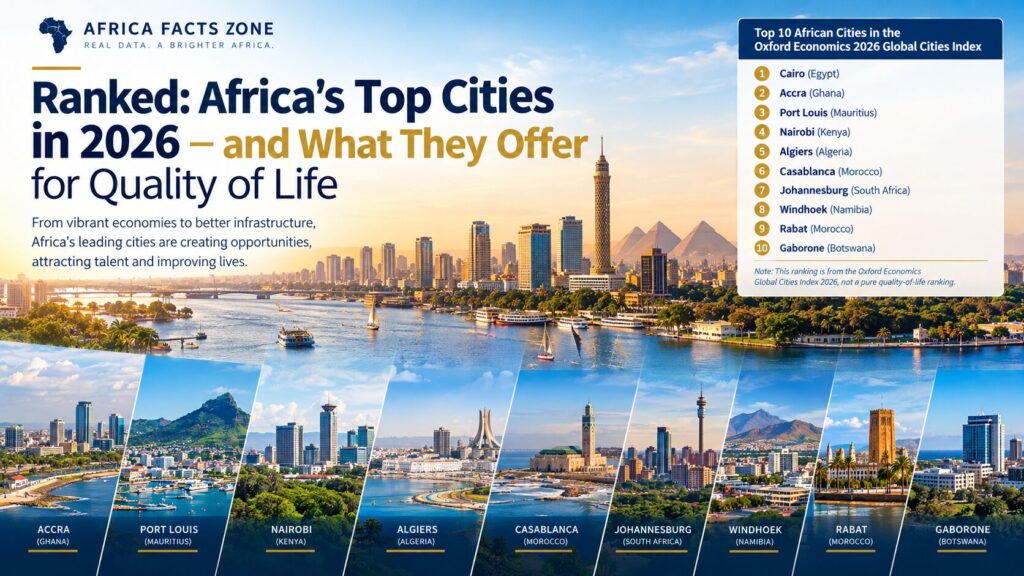
Oxford Economics’ 2026 Global Cities Index highlights Cairo, Accra, Dakar, Luanda and Nairobi as cities to watch for their economic momentum and expanding technology or professional services activity.
However, economic growth alone does not guarantee a better quality of life. Cities must also address housing needs, transport, environmental pressures, public safety and access to essential services.
Effective planning and investment will be essential to ensure that urban growth improves living conditions for a broad share of the population.
Final Thoughts
The 2026 Quality of Life Index comparison highlights the strong performance of several South African cities, while Tunis, Nairobi, Casablanca and Alexandria demonstrate the diversity of urban experiences across Africa.
There is no single city that is ideal for everyone. The best place to live depends on individual priorities, including career opportunities, affordability, family needs, healthcare, safety and lifestyle.
As African cities continue to develop, improving infrastructure and making urban services more accessible will be essential to turning economic potential into better everyday living.
Understanding these differences helps residents, businesses and policymakers make more informed decisions about the future of Africa’s urban centres.