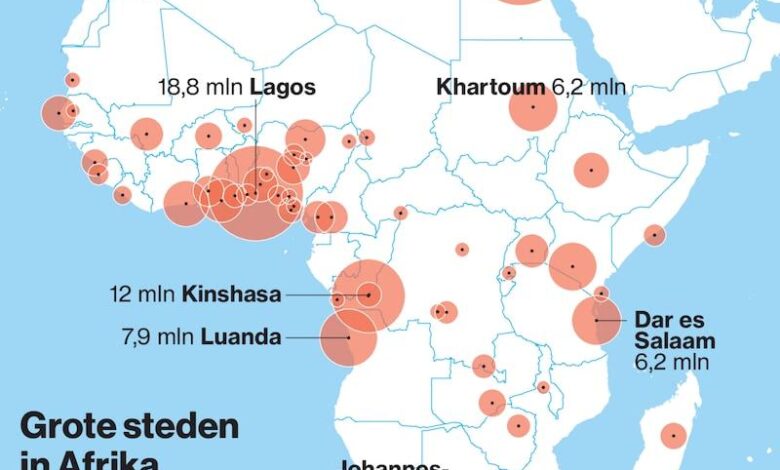
Africa’s cities are growing at a remarkable pace. From Cairo and Lagos to Kinshasa and Dar es Salaam, major urban centres continue to attract people, businesses and investment. As populations increase, these cities are changing the continent’s economic and social landscape.
The United Nations estimates that Africa’s urban population will continue to expand over the coming decades. This growth creates opportunities for trade, employment, housing and innovation. However, it also increases pressure on transport networks, water supply, electricity, sanitation and public services.
This ranking compares Africa’s 30 largest cities by population in 2025. It also examines the forces behind their expansion and what their growth means for the continent’s future.
Africa’s 30 Largest Cities by Population in 2025
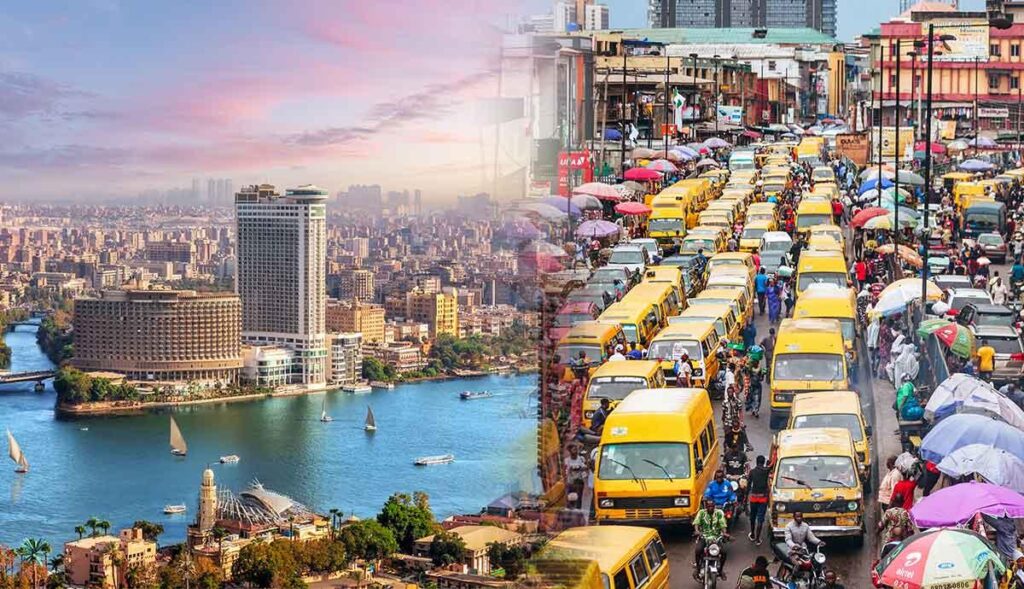
Cairo, Egypt, leads the ranking with approximately 25.6 million residents. Lagos, Nigeria, follows with 12.8 million, while Luanda in Angola and Kinshasa in the Democratic Republic of the Congo each have more than 10 million residents.
The figures below are 2025 estimates, rounded to the nearest thousand. They represent urban population estimates rather than city-proper or municipal populations.
| Rank | City | Country | 2025 Population |
|---|---|---|---|
| 1 | Cairo (Al-Qahirah) | Egypt | 25,566,000 |
| 2 | Lagos | Nigeria | 12,792,000 |
| 3 | Luanda | Angola | 11,370,000 |
| 4 | Kinshasa | DR Congo | 10,944,000 |
| 5 | Dar es Salaam | Tanzania | 7,795,000 |
| 6 | Alexandria | Egypt | 7,267,000 |
| 7 | Johannesburg | South Africa | 7,077,000 |
| 8 | Khartoum | Sudan | 6,809,000 |
| 9 | Addis Ababa | Ethiopia | 6,706,000 |
| 10 | Abidjan | Côte d’Ivoire | 6,622,000 |
| 11 | Nairobi | Kenya | 6,134,000 |
| 12 | Onitsha | Nigeria | 5,628,000 |
| 13 | Accra | Ghana | 5,593,000 |
| 14 | Yaoundé | Cameroon | 5,106,000 |
| 15 | Kampala | Uganda | 4,881,000 |
| 16 | Kano | Nigeria | 4,840,000 |
| 17 | Cape Town | South Africa | 4,509,000 |
| 18 | Casablanca | Morocco | 4,457,000 |
| 19 | Mogadishu | Somalia | 4,399,000 |
| 20 | Kumasi | Ghana | 4,298,000 |
| 21 | Bamako | Mali | 4,245,000 |
| 22 | Luxor | Egypt | 4,188,000 |
| 23 | Douala | Cameroon | 4,105,000 |
| 24 | Antananarivo | Madagascar | 3,916,000 |
| 25 | Dakar | Senegal | 3,852,000 |
| 26 | Owerri | Nigeria | 3,833,000 |
| 27 | Ibadan | Nigeria | 3,721,000 |
| 28 | Brazzaville | Republic of the Congo | 3,656,000 |
| 29 | Kasaï-Oriental | DR Congo | 3,606,000 |
| 30 | Lusaka | Zambia | 3,511,000 |
Source: United Nations, World Urbanization Prospects 2025. Figures represent estimated urban populations.
Cairo Leads Africa’s Urban Population
Cairo stands well ahead of every other African city. With an estimated 25.6 million residents, Egypt’s capital is also one of the world’s largest urban centres. Its population reflects decades of growth around the Nile Valley, strong economic activity and the concentration of government, education, transport and commercial services.
Lagos ranks second with nearly 12.8 million people. Nigeria’s commercial centre attracts residents from across the country and beyond. Its ports, financial services, technology companies, markets and entertainment industries create employment opportunities that continue to draw people into the wider urban area.
Luanda and Kinshasa complete the continent’s four cities with populations above 10 million. Both have experienced significant urban expansion.
Luanda’s growth has been particularly striking: its population rose from around 715,000 in 2000 to approximately 11.4 million in 2025 under the UN’s harmonised city definition. This represents one of the most dramatic increases among major African urban centres.
For a broader international comparison of urban population trends, see the UN’s The World’s Cities in 2025: Data Booklet, which explores city populations and future urban growth.
East and Southern Africa’s Expanding Urban Centres
East Africa has a strong presence in the ranking. Dar es Salaam, Tanzania, has approximately 7.8 million residents, making it the region’s largest city in this list. Its position as a commercial and transport hub has helped it attract residents and businesses. The city also benefits from its coastal location and its role in connecting Tanzania with neighbouring landlocked countries.
Addis Ababa, Ethiopia, and Nairobi, Kenya, are other major urban centres. Both serve as important business, government and transport hubs. Nairobi has developed a strong technology and services sector, while Addis Ababa hosts major diplomatic and regional institutions.
Johannesburg, Cape Town and Durban represent South Africa’s major urban centres in the ranking. Johannesburg remains a key financial and commercial hub, while Cape Town attracts tourism, technology businesses and international investment. Durban’s port and industrial base support its role in regional trade.
West and Central Africa’s Population Hubs
West Africa features several large and fast-growing urban centres. Abidjan, Côte d’Ivoire, is an important commercial and financial hub, while Accra and Kumasi anchor Ghana’s urban economy. Dakar, Senegal, serves as a major centre for government, trade, education and transport.
Nigeria has a particularly strong presence. Alongside Lagos, the ranking includes Onitsha, Kano, Owerri, Ibadan, Port Harcourt, Kaduna and Benin City. Their large urban populations reflect the country’s size, commercial networks and widespread movement from rural communities to towns and cities.
Central Africa also has major population centres. Kinshasa is the region’s largest urban centre, while Douala and Yaoundé are important hubs in Cameroon. Brazzaville, Lubumbashi and other cities in the Democratic Republic of the Congo also feature in the top 30.
What Is Driving Population Growth in African Cities?
Several forces explain the expansion of Africa’s largest cities.
1. Rural-to-urban migration
People move to cities in search of employment, education, healthcare and better access to services. Young adults often relocate to urban areas because they offer more opportunities in construction, manufacturing, retail, finance and technology.
The scale and effects of this movement are explored in the OECD’s report on Africa’s urbanisation dynamics, which examines the continent’s changing urban landscape.
2. Natural population increase
High birth rates and young populations also contribute to urban growth. Furthermore, many African countries have a large share of people under the age of 25.
As a result, more young people are entering working age, increasing the demand for housing, schools, transport and employment. Consequently, cities must expand their infrastructure and public services to accommodate this growing population.
3. Business and investment opportunities
Major cities attract local and international investment. Businesses often choose urban locations because they provide access to customers, suppliers, skilled workers and transport infrastructure. Strong financial institutions also help fund companies and development projects.
Read our report on Africa’s 30 largest banks in 2026 to explore the financial institutions supporting the continent’s economy.
4. Technology and changing lifestyles
Digital businesses, mobile services and technology hubs are creating new opportunities in several African cities. Nairobi, Lagos, Cairo and Johannesburg have developed active technology communities. For more context, explore Africa’s leading computing and tech countries in 2026.
The Challenges of Rapid Urbanisation
Although urban growth can support economic development, it also creates serious planning challenges. Many cities struggle to provide affordable housing for their expanding populations. As demand increases, informal settlements can grow where residents have limited access to reliable water, sanitation, electricity and safe roads.
Traffic congestion is another major concern. Growing populations increase demand for public transport and road networks. Without effective planning, long commuting times can reduce productivity and raise the cost of doing business.
City authorities must also prepare for climate risks. Flooding, extreme heat, coastal erosion and poor drainage can threaten homes, businesses and public infrastructure. Investment in resilient buildings, green spaces, drainage systems and reliable public transport will become increasingly important.
What Africa’s Growing Cities Mean for the Future
Africa’s urban expansion presents a major opportunity. Cities can become stronger centres of manufacturing, finance, technology, education and trade. However, governments and investors must plan for population growth instead of reacting only after infrastructure becomes overstretched.
Affordable housing, dependable electricity, clean water, waste management and efficient transport should remain central to urban development strategies. Better land-use planning can also reduce unplanned expansion and protect valuable environmental areas.
Transport and logistics infrastructure will play an important role in connecting cities to regional and international markets. Africa’s ports are part of this wider network. See our ranking of Africa’s 20 busiest seaports by cargo volume in 2026 for a closer look at the maritime gateways supporting trade.
Conclusion
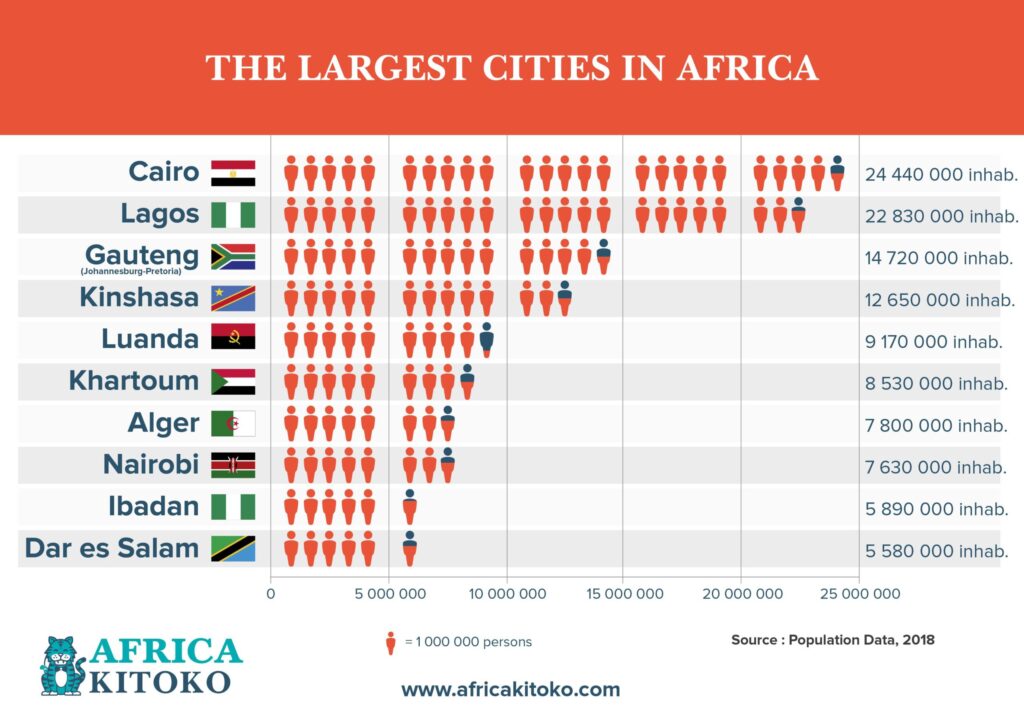
Africa’s 30 largest cities show how quickly the continent’s urban landscape is changing. For example, Cairo leads by a wide margin, while Lagos, Luanda and Kinshasa have also grown into major population centres.
Meanwhile, Dar es Salaam, Abidjan, Nairobi, Addis Ababa and several Nigerian cities demonstrate the scale of urban growth across different regions.
Looking ahead, the next stage of this transformation will depend on how well governments, businesses and communities respond.
Therefore, cities that invest in housing, transport, utilities, technology and climate resilience will be better placed to turn population growth into long-term economic progress. In addition, effective planning and sustainable development will help them manage the pressure of expanding populations.
Africa’s urban future is not simply about building bigger cities. Instead, it is about creating places where more people can live safely, work productively and access better opportunities.