Mapped: Electricity Access Across Africa – Which Countries Are Still in the Dark?

Introduction: Africa’s Unequal Access to Electricity
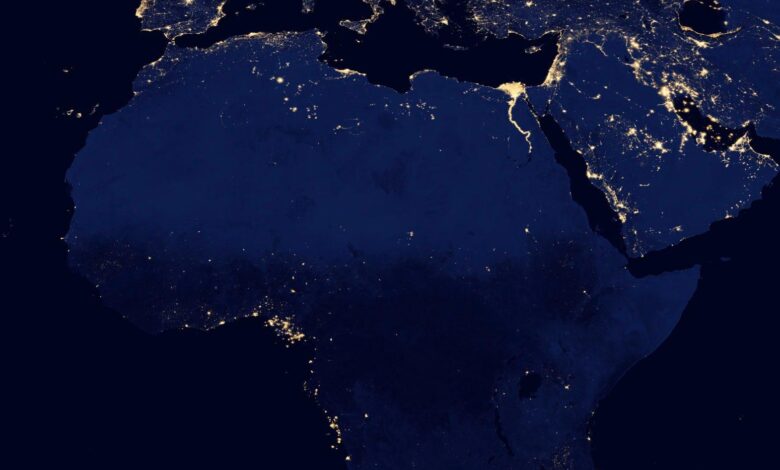
Electricity is essential for economic development, education, healthcare and modern living. However, millions of people across Africa still live without reliable access to power.
While some countries have achieved almost universal electricity coverage, others continue to struggle with widespread shortages. The difference becomes even more noticeable between urban centres and rural communities.
Countries such as Egypt, Morocco, Algeria and Mauritius have made significant progress towards universal electricity access. Meanwhile, South Sudan, Malawi, Chad, Burundi and the Democratic Republic of the Congo remain among the countries with the lowest national access rates.
This article maps electricity access across Africa, compares national electrification rates and examines the urban-rural divide that continues to affect millions of households.
For country-level comparisons and updated figures, readers can consult the World Bank Electricity Access Data, which tracks the percentage of the population with access to electricity.
Electricity Access Across Africa: Country Rankings
The World Bank’s electricity access indicator measures the percentage of a country’s population with access to electricity. Its 2024 figures reveal considerable differences between African countries.
North African countries generally perform strongly, while several countries in Central, Eastern and Southern Africa still face major infrastructure challenges.
The following table compares selected African countries using their 2024 national electricity access rates.
| Rank | Country | Electricity Access (%) |
|---|---|---|
| 1 | Algeria | 100.0% |
| 2 | Egypt | 100.0% |
| 3 | Mauritius | 100.0% |
| 4 | Morocco | 100.0% |
| 5 | Tunisia | 100.0% |
| 6 | Seychelles | 100.0% |
| 7 | Cabo Verde | 98.4% |
| 8 | Gabon | 95.1% |
| 9 | Ghana | 91.9% |
| 10 | Comoros | 91.7% |
| 11 | South Africa | 90.2% |
| 12 | Senegal | 82.9% |
| 13 | Botswana | 80.2% |
| 14 | Kenya | 77.0% |
| 15 | Rwanda | 72.0% |
| 16 | Nigeria | 62.5% |
| 17 | Tanzania | 52.4% |
| 18 | Mozambique | 36.9% |
| 19 | Burkina Faso | 34.0% |
| 20 | Central African Republic | 18.2% |
| 21 | Burundi | 20.1% |
| 22 | Malawi | 15.6% |
| 23 | Chad | 13.4% |
| 24 | South Sudan | 5.4% |
Source: World Bank, World Development Indicators, 2024.
Source: World Bank, World Development Indicators, 2024. Figures represent national electricity access rates. The selection highlights countries across different performance levels and is not a complete ranking of all African countries.
Which African Countries Have the Lowest Electricity Access?
Although several African countries have achieved impressive electrification levels, others remain far behind.
1. South Sudan – 5.4%
South Sudan has one of the lowest electricity access rates in Africa. Only approximately 5.4% of its population had access to electricity in 2024.
Years of conflict, limited infrastructure investment and economic difficulties have slowed the development of its electricity sector.
Many communities depend on diesel generators, small solar installations and other alternative energy sources. Expanding national transmission networks and affordable off-grid solutions will be essential to improving access.
2. Chad – 13.4%
Chad recorded an electricity access rate of approximately 13.4% in 2024. Its large geographical area and widely dispersed rural population make electricity distribution particularly challenging. Infrastructure costs also limit the expansion of conventional grid connections.
Solar power offers considerable opportunities because of the country’s abundant sunshine. However, investment in distribution networks and affordable household connections remains important.
3. Malawi – 15.6%
Malawi continues to face significant electricity access challenges. Only around 15.6% of its population had electricity access in 2024.
Rural communities experience particularly serious shortages. Limited generation capacity, infrastructure costs and affordability issues affect the expansion of electricity services.
Off-grid solar systems and mini-grids could help connect communities that are difficult to reach through conventional power networks.
4. Burundi – 20.1%
Burundi recorded an electricity access rate of approximately 20.1%. Its predominantly rural population creates additional challenges for conventional grid expansion. Many households still depend on traditional fuels for cooking and lighting.
Investment in renewable energy, local distribution networks and rural electrification programmes could improve access over time.
5. Democratic Republic of the Congo – 22.5%
The Democratic Republic of the Congo has enormous hydropower potential, yet electricity access remains limited. Despite its natural resources, only around 22.5% of the population had electricity access in 2024.
The country’s large territory, limited transmission infrastructure and uneven investment have prevented many communities from benefiting from its energy resources.
The contrast between its enormous electricity potential and low household access makes the DRC one of Africa’s most important electrification challenges.
The Urban-Rural Electricity Divide in Africa
National electricity access figures do not tell the entire story. A country might report improving electricity coverage while millions of people in rural communities remain disconnected.
The UN Africa Sustainable Development Report 2026 provides further insight into the continent’s development challenges, including unequal access to essential services and infrastructure.
According to the United Nations’ 2026 Africa Sustainable Development Report, regional electricity access figures for 2023 show a substantial difference between urban and rural communities.
| African Region | Urban Access (2023) | Rural Access (2023) |
|---|---|---|
| Africa | 85% | 40% |
| North Africa | 97% | 87% |
| Central Africa | 80% | 10% |
| East Africa | 82% | 35% |
| Southern Africa | — | 84% |
Note: — indicates that a separate urban access figure was not reported.
Source: United Nations, Africa Sustainable Development Report 2026. The regional chart reports urban and rural access figures for 2023. The Southern African urban value is not reproduced here because the published chart value requires a separate extraction.
The difference across the continent is significant. In 2023, approximately 85% of urban residents had electricity access, compared with just 40% of rural residents.
Central Africa faces one of the widest gaps. While approximately 80% of urban residents had electricity, rural access stood at only around 10%. These differences reflect the high cost of extending power infrastructure to remote settlements.
Urban communities generally benefit from established transmission networks, larger customer bases and greater commercial investment. Rural communities, on the other hand, often have scattered households and fewer connections per kilometre of electricity infrastructure.
Why Do Rural Communities Struggle with Electricity Access?
Several factors explain the continuing urban-rural electricity divide.
1. High Infrastructure Costs
Connecting a city neighbourhood is often cheaper than extending electricity lines across remote villages.
Rural electrification requires additional transmission poles, transformers, distribution networks and maintenance services. Consequently, the cost per household can become much higher.
2. Limited Investment
Many electricity projects attract investment towards major cities and industrial centres because these locations offer larger customer bases.
Rural communities may therefore wait longer for new infrastructure.
3. Affordability Challenges
Even where electricity networks exist, connection fees and monthly bills can prevent low-income households from accessing power.
Affordable financing and targeted government support can help address this problem.
4. Dependence on Traditional Energy Sources
In communities without electricity, households often depend on kerosene lamps, firewood and other traditional energy sources.
These alternatives can create health, environmental and economic challenges.
Can Solar Energy Help Close Africa’s Electricity Gap?
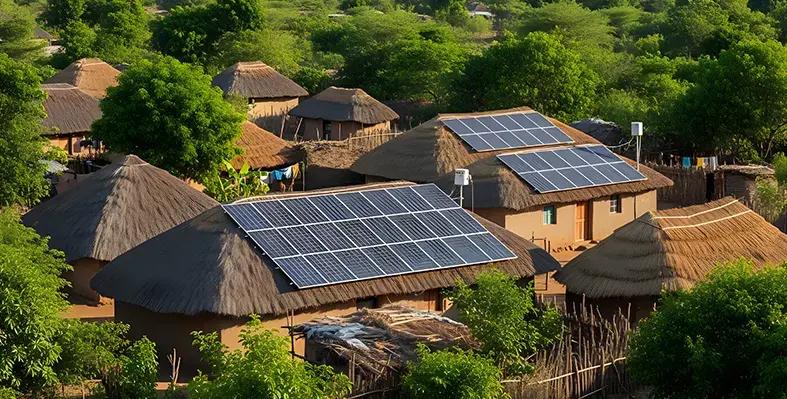
Solar energy is becoming an important solution to Africa’s electricity challenges.
Countries with abundant sunshine can develop large solar farms, rooftop installations, mini-grids and individual household systems.
For remote communities, off-grid solar solutions can provide electricity without waiting for national transmission networks to arrive.
South Africa, Egypt, Morocco and Tunisia have already expanded their solar industries. Other countries are also exploring renewable energy investment to improve electricity security.
Read our report on Africa’s 10 Largest Solar Energy Producers in 2025 to discover the countries leading the continent’s solar expansion.
However, solar power alone cannot solve every electricity challenge. Governments must also invest in transmission infrastructure, energy storage, distribution networks and affordable financing.
Financing is also essential for expanding electricity infrastructure and supporting large-scale renewable energy projects. Read our ranking of Africa’s 30 Largest Banks in 2026 to discover some of the continent’s biggest financial institutions.
What Does Electricity Access Mean for Africa’s Future?
Reliable electricity supports nearly every major economic sector. Hospitals need power for medical equipment, laboratories and medicine storage. Schools require electricity for lighting, computers and digital learning.
Businesses depend on reliable energy to operate machinery, maintain production and serve customers. Furthermore, electricity supports agricultural processing, irrigation, telecommunications and industrial development.
As Africa’s cities continue to expand, demand for reliable power will increase. Explore our report on Africa’s 30 Largest Cities by Population to understand the scale of the continent’s urban growth.
The success of Africa’s electrification efforts will therefore depend on how effectively governments combine traditional grid expansion with renewable energy and decentralised electricity systems.
Conclusion: Africa’s Electricity Gap Remains a Major Development Challenge
Electricity access across Africa has improved, but progress remains uneven. Countries such as Algeria, Egypt, Morocco, Mauritius and Tunisia have achieved universal national access according to the latest World Bank figures.
For a broader perspective on global electricity access and progress towards universal electrification, explore Tracking SDG7: The Energy Progress Report.
Meanwhile, South Sudan, Chad, Malawi, Burundi and the Democratic Republic of the Congo continue to face serious shortages.
The urban-rural divide makes the challenge even more complicated. Millions of rural residents remain disconnected despite improvements in national electricity coverage.
Closing this gap will require sustained investment, effective energy policies, stronger infrastructure and affordable renewable energy solutions.
Africa has enormous natural energy resources. Turning that potential into dependable electricity for households, schools, hospitals and businesses will be essential to the continent’s long-term development.