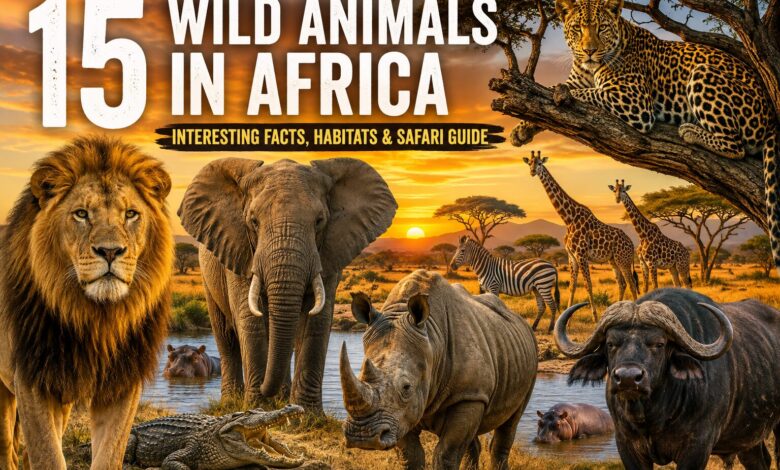
15 Wild Animals in Africa: Interesting Facts, Habitats & Safari Guide

Africa is home to some of the world’s most spectacular wildlife. From the roar of a lion echoing across the savannah to a herd of elephants gathering at a watering hole, every safari offers unforgettable encounters with nature. With thousands of animal species spread across deserts, forests, wetlands, and grasslands, the continent remains one of the best destinations for wildlife lovers and photographers.
Whether you’re planning your first African safari or simply want to learn more about Africa’s incredible biodiversity, this guide explores some of the continent’s most iconic animals, where they live, and why protecting them is more important than ever.
The Big Five of Africa
No safari is complete without hearing about Africa’s famous Big Five—the lion, leopard, African elephant, rhinoceros, and African buffalo. The term originally referred to the five most dangerous animals for hunters to track on foot, but today they are the most sought-after wildlife sightings for safari visitors. Conservation organizations now use the popularity of the Big Five to promote wildlife protection and responsible tourism.
1. African Lion


Known as the King of the Jungle, the African lion is actually most at home on open grasslands and savannahs. Lions are highly social cats that live in family groups called prides, usually led by several females and a small coalition of males.
Unlike many big cats, lions spend much of the day resting and become most active during the cooler hours of the morning and evening. Watching a pride coordinate a hunt or hearing a lion roar across the plains is one of Africa’s greatest wildlife experiences.
The best places to see lions include Tanzania’s Serengeti National Park, Kenya’s Maasai Mara, Botswana’s Okavango Delta, and South Africa’s Kruger National Park.
Related: Read our guide to African Lions: Facts, Habitat and Conservation
2. African Elephant


The African elephant is the world’s largest land animal and one of the continent’s greatest conservation icons. These intelligent giants play a vital role in maintaining ecosystems by creating pathways through forests, dispersing seeds, and digging water holes that benefit other wildlife.
Africa is home to two elephant species: the African Savanna Elephant and the African Forest Elephant. While elephant populations have shown signs of recovery in some protected areas, both species continue to face threats from habitat loss and illegal ivory poaching. The African Forest Elephant is listed as Critically Endangered, while the Savanna Elephant is classified as Endangered by the IUCN.
Elephants can often be seen gathering in large herds around rivers and waterholes, especially during the dry season.
3. Leopard


Leopards are among Africa’s most elusive predators. Unlike lions, they prefer solitude and often rest high in tree branches after dragging their prey out of reach of scavengers.
Their spotted coats provide excellent camouflage, making them surprisingly difficult to spot even when they’re only a few metres away.
Early morning and evening game drives offer the highest chance of seeing a leopard, especially in South Africa’s Sabi Sand Game Reserve, Botswana’s Moremi Game Reserve, and Zambia’s South Luangwa National Park.
4. Rhinoceros
Both the black rhino and white rhino are among Africa’s most endangered mammals. Decades of illegal poaching for their horns dramatically reduced their populations.
Fortunately, conservation programmes across countries such as Kenya, Namibia, South Africa, and Rwanda have helped several rhino populations recover, although they remain under close protection. Recent conservation efforts have led to encouraging increases in some black and white rhino populations, demonstrating that sustained protection can make a significant difference.
Seeing a rhino in the wild is one of the rarest and most rewarding safari experiences.
5. African Buffalo
Often underestimated, the African buffalo is considered one of the most dangerous animals on the continent due to its unpredictable behaviour.
Buffaloes travel in herds that can number from a few dozen to several hundred individuals. Their strength and willingness to defend each other make them formidable opponents—even lions think carefully before attacking a healthy adult buffalo.
Large herds are commonly seen near rivers and open grasslands throughout East and Southern Africa.
6. Cheetah
The cheetah is the fastest land animal on Earth, capable of reaching speeds of over 100 km/h (62 mph) during short bursts.
Unlike lions or leopards, cheetahs rely on speed rather than strength. They prefer wide-open plains where they can spot prey from a distance before launching an explosive chase.
The Serengeti ecosystem in Tanzania and Kenya’s Maasai Mara offer some of the world’s best opportunities to witness a cheetah hunt.
7. Giraffe
Towering above Africa’s grasslands, giraffes are impossible to miss. Their long necks allow them to browse leaves that other herbivores cannot reach, making them an important part of the savannah ecosystem.
Each giraffe has a unique pattern of spots, much like a human fingerprint. Watching these gentle giants move gracefully across the plains is a favourite moment for many safari visitors.
They are commonly found in Kenya, Tanzania, Namibia, Botswana, and South Africa.
8. Hippopotamus


Despite their calm appearance, hippos are among the most territorial and dangerous animals in Africa. They spend most of the day submerged in rivers, lakes, and swamps to keep their bodies cool under the African sun. At dusk, they leave the water to graze on grass, often travelling several kilometres in a single night.
Hippos play an important role in freshwater ecosystems by recycling nutrients between land and water. However, they can become highly aggressive if they feel threatened, especially when protecting their calves. Visitors should always maintain a safe distance during boat safaris or while viewing them from riverbanks.
The best places to see hippos include Botswana’s Okavango Delta, Zambia’s South Luangwa National Park, Uganda’s Murchison Falls National Park, and Tanzania’s Selous Game Reserve.
9. Nile Crocodile


The Nile crocodile is Africa’s largest reptile and one of the continent’s top predators. Some individuals grow longer than 5 metres (16 feet) and can weigh well over 700 kilograms.
These powerful reptiles spend much of the day basking in the sun before ambushing fish, birds, antelope, and other animals that come to drink. During the annual Great Migration, thousands of wildebeest risk crossing crocodile-filled rivers in one of nature’s most dramatic spectacles.
Nile crocodiles are found throughout sub-Saharan Africa in rivers, lakes, marshes, and wetlands.
10. Zebra


The zebra is one of Africa’s most recognizable animals thanks to its striking black-and-white stripes. Scientists believe no two zebras share the exact same stripe pattern, making each individual unique.
Zebras live in family groups and often migrate alongside wildebeest and antelope in search of fresh grazing land. Their excellent eyesight and hearing help alert other animals to approaching predators.
They are commonly seen across East and Southern Africa, particularly in Kenya, Tanzania, Botswana, Namibia, and South Africa.
11. Spotted Hyena
Although hyenas are often portrayed as scavengers, research has shown they are highly skilled hunters that catch much of their own food. Living in large social groups called clans, spotted hyenas have one of the most complex social structures among mammals.
Their famous “laugh” is actually a form of communication used to signal excitement, submission, or stress.
Hyenas are widespread across Africa’s savannahs and are frequently seen during early morning or evening game drives.
12. Wildebeest
Every year, more than 1.5 million wildebeest, accompanied by hundreds of thousands of zebras and gazelles, take part in the Great Migration across the Serengeti-Mara ecosystem. This incredible journey follows seasonal rainfall in search of fresh grass and is considered one of the greatest wildlife spectacles on Earth.
River crossings, where crocodiles wait beneath the surface, provide some of the most dramatic moments for wildlife photographers and documentary filmmakers.
Related: The Great Migration in Africa: What, When and Where
13. African Wild Dog


The African wild dog, also known as the painted dog, is one of Africa’s most endangered predators. Recognizable by its colourful coat and large rounded ears, this remarkable hunter relies on teamwork rather than brute strength.
Wild dogs have one of the highest hunting success rates of any large carnivore, often working together to chase prey over long distances until it becomes exhausted.
Although sightings are relatively rare, they can be found in Botswana, Zimbabwe, Zambia, Tanzania, and parts of South Africa.
14. Baboons and Monkeys
Africa is home to hundreds of primate species, from playful vervet monkeys to intelligent olive baboons. These animals are highly adaptable and are often seen near roads, picnic sites, forests, and national parks.
While watching them can be entertaining, visitors should never feed wild primates. Feeding changes their natural behaviour and may increase conflict between humans and wildlife.
Popular species include:
- Olive Baboon
- Chacma Baboon
- Vervet Monkey
- Blue Monkey
- Samango Monkey
Why Wildlife Conservation Matters
Africa’s wildlife is one of the continent’s greatest natural treasures, supporting biodiversity, tourism, and millions of local livelihoods. Wildlife tourism contributes billions of dollars to African economies each year while helping fund national parks and conservation programmes.
However, many species continue to face serious threats, including habitat loss, climate change, human-wildlife conflict, and illegal poaching. Governments, conservation organisations, and local communities are working together to expand protected areas, restore habitats, and strengthen anti-poaching efforts. Visitors can support these efforts by choosing responsible safari operators that prioritise conservation and community development.
Frequently Asked Questions
What are the Big Five animals in Africa?
The Big Five are the lion, leopard, African elephant, rhinoceros, and African buffalo. They are the most famous animals sought by safari travellers.
Which country has the best wildlife safari?
Some of Africa’s top safari destinations include Kenya, Tanzania, Botswana, South Africa, Namibia, Zambia, Uganda, and Rwanda. Each offers unique landscapes and wildlife experiences.
What is the rarest animal to see on safari?
The African wild dog is among the rarest predators to encounter because of its low population and wide-ranging movements.
When is the best time for an African safari?
The dry season, generally between June and October in many safari destinations, is considered the best time because animals gather around rivers and waterholes, making them easier to spot.
Final Thoughts
Africa offers some of the most extraordinary wildlife experiences on Earth. From the mighty African elephant and powerful lion to the lightning-fast cheetah and endangered African wild dog, every species plays a crucial role in maintaining the continent’s rich ecosystems.
Whether you’re planning your first safari or simply exploring Africa’s remarkable biodiversity from home, learning about these incredible animals helps us appreciate the importance of protecting them for future generations. By supporting responsible tourism and conservation initiatives, every visitor can contribute to safeguarding Africa’s wildlife heritage.