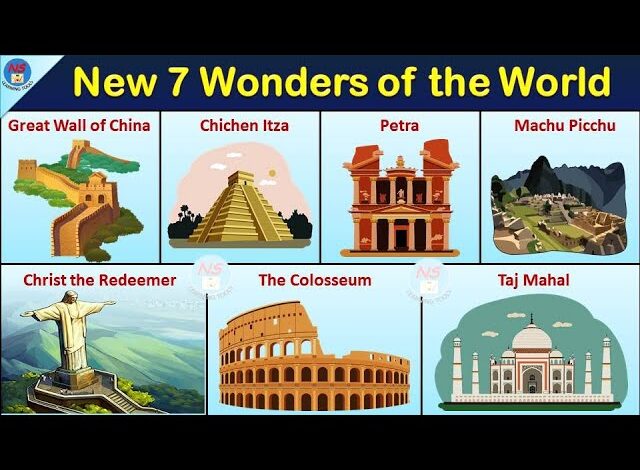
From ancient empires to breathtaking architectural masterpieces, the 7 Wonders of the World represent humanity’s greatest achievements in engineering, creativity, and cultural legacy. Across continents and centuries, these extraordinary landmarks continue to inspire millions of travelers, historians, and explorers.
While countless monuments could qualify as global marvels, the modern New 7 Wonders of the World were selected through a worldwide campaign organized by the New7Wonders Foundation in 2007, drawing over 100 million votes. These sites symbolize the brilliance of human civilization and stand as powerful reminders of our shared history.
What Are the 7 Wonders of the World?
The 7 Wonders of the World are globally recognized monuments celebrated for their historical significance, architectural genius, and cultural impact. These wonders showcase how civilizations across time created extraordinary structures that have survived wars, natural disasters, and the passage of centuries.
They are more than tourist attractions—they are living testaments to innovation, ambition, faith, and artistry.
The 7 Wonders of the World
1. Taj Mahal (India)
Located in Agra, India, the Taj Mahal is one of the most famous monuments on Earth and a timeless symbol of love. Mughal Emperor Shah Jahan commissioned this white marble mausoleum in 1632 in memory of his beloved wife, Mumtaz Mahal.
Constructed over 17 years by approximately 22,000 artisans, laborers, and craftsmen, the Taj Mahal is renowned for its symmetrical beauty, intricate carvings, and gemstone inlays. Its marble exterior changes color depending on sunlight and moonlight, creating a magical visual experience.
Recognized as a UNESCO World Heritage Site in 1983, the Taj Mahal attracts between 7–8 million visitors annually.
Why it’s extraordinary:
- Built with white marble and precious stones
- Symbol of eternal love
- UNESCO World Heritage Site
2. Colosseum (Italy)
The Colosseum in Rome is the largest ancient amphitheater ever built and a symbol of Imperial Rome’s power. Completed in AD 80 under Emperor Titus, this massive structure could hold up to 80,000 spectators.
Used for gladiator battles, mock naval battles, executions, and dramatic performances, the Colosseum was both an entertainment arena and a political symbol.
Despite earthquakes and centuries of damage, it remains one of Europe’s most visited landmarks.
Key facts:
- Largest amphitheater in the ancient world
- Held 80,000 spectators
- Built with concrete and stone
3. Chichen Itza (Mexico)
Deep in Mexico’s Yucatán Peninsula lies Chichen Itza, one of the greatest cities of the ancient Maya civilization.
Its most famous structure, the Temple of Kukulkan (El Castillo), demonstrates remarkable astronomical precision. Each of its four stairways has 91 steps, totaling 365 with the top platform—matching the solar calendar.
This UNESCO-listed site reveals the Maya’s advanced understanding of mathematics, astronomy, and architecture.
Highlights:
- Ancient Mayan city
- Temple aligned with celestial events
- UNESCO World Heritage Site
Also Read: The 7 Wonders of the World Ancient
4. Machu Picchu (Peru)
Nestled high in Peru’s Andes Mountains, Machu Picchu is one of the world’s most stunning archaeological treasures.
Believed to have been built around 1450 by the Inca emperor Pachacuti, this mountain citadel remained hidden from the outside world until American explorer Hiram Bingham brought international attention to it in 1911.
Its earthquake-resistant dry-stone construction, spiritual significance, and panoramic mountain setting make it one of humanity’s greatest engineering feats.
Notable features:
- Inca citadel in the Andes
- Advanced earthquake-resistant design
- Spiritual and historical significance
5. Christ the Redeemer (Brazil)
Towering above Rio de Janeiro atop Corcovado Mountain, Christ the Redeemer is one of the world’s most recognizable statues.
Completed in 1931, this Art Deco masterpiece stands 98 feet tall, with arms stretching 92 feet wide, symbolizing peace and welcome.
Constructed from reinforced concrete and soapstone, it has become a global icon of Christianity and Brazilian culture.
Why it stands out:
- Art Deco architectural masterpiece
- Overlooks Rio de Janeiro
- Symbol of peace and faith
6. Petra (Jordan)
Known as the Rose City because of its pink sandstone cliffs, Petra is Jordan’s archaeological jewel.
Built by the Nabataeans over 2,000 years ago, Petra features sophisticated water systems, tombs, temples, and monumental facades carved directly into rock.
Its most famous structure, Al-Khazneh (The Treasury), gained worldwide fame through films like Indiana Jones and the Last Crusade.
Major attractions:
- Rock-cut architecture
- Advanced desert water engineering
- UNESCO World Heritage Site
7. Great Wall of China (China)
Stretching more than 21,000 kilometers, the Great Wall of China is one of history’s greatest defensive systems.
Originally built from the 7th century BCE and expanded by multiple dynasties, especially the Ming Dynasty, the wall was designed to protect Chinese states from invasions.
Far more than a wall, it includes watchtowers, military barracks, and fortifications.
Remarkable facts:
- Over 21,000 km long
- Built across centuries
- UNESCO World Heritage Site
Also Read: World’s Seven Natural Wonders Vs Seven Natural Wonders of Africa
Honorary Wonder: The Great Pyramid of Giza (Egypt)
Though not included in the New 7 Wonders list, the Great Pyramid of Giza remains the only surviving structure from the Ancient Seven Wonders.
Built around 2560 BCE as Pharaoh Khufu’s tomb, it stood as the world’s tallest man-made structure for over 3,800 years.
Its engineering precision continues to puzzle experts today.
Why it matters:
- Oldest ancient wonder
- Last surviving ancient wonder
- Monumental engineering mystery
Why the 7 Wonders of the World Matter Today
These wonders are more than historical monuments—they are symbols of:
- Human ingenuity
- Cultural identity
- Architectural excellence
- Spiritual and political history
They remind us that even in vastly different eras, humanity has always sought to create something extraordinary.
Final Thoughts
The 7 Wonders of the World continue to stand as monuments to ambition, creativity, and perseverance. Whether it’s the romantic elegance of the Taj Mahal, the military might of the Great Wall, or the mystical beauty of Machu Picchu, each wonder tells a story of civilization at its peak.
For travelers, historians, and curious minds alike, these landmarks are essential reminders that history’s greatest achievements still shape our world today.