Frederick C. Branch: First Black American U.S. Marine Corps Officer

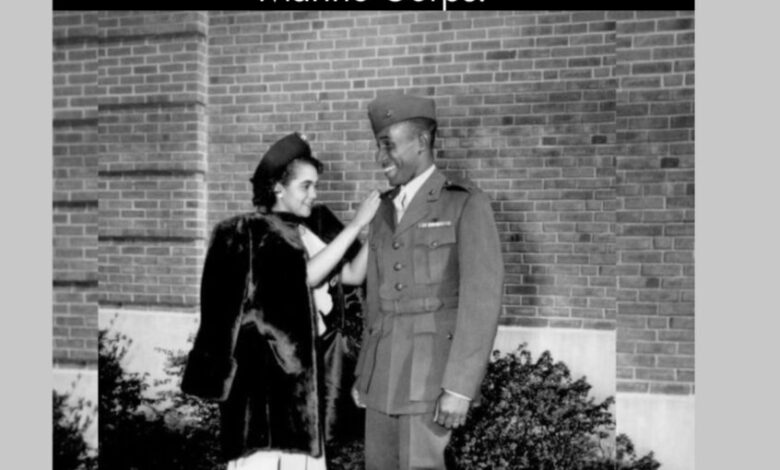
Frederick Clinton Branch stands as one of the most important figures in African American military history. Born on May 31, 1922, in Hamlet, North Carolina, he would one day shatter racial barriers by becoming the first African American commissioned officer in the U.S. Marine Corps. His life reflects courage, academic excellence, and resilience during a time when America’s military was still segregated.
This comprehensive biography explores Branch’s early life, education, military service during World War II and the Korean War, and his lasting legacy — supported by authoritative external sources for further reading.
Early Life and Academic Beginnings
Frederick C. Branch spent his early years in the American South before moving north, where he graduated from high school in Mamaroneck, New York. His journey into higher education began at Johnson C. Smith University, a historically Black university in Charlotte, North Carolina, founded in 1867.
🔗 Johnson C. Smith University: https://www.jcsu.edu
Branch later transferred to Temple University in Philadelphia, Pennsylvania, to continue his academic pursuits. Temple’s inclusive environment and strong academic programs provided Branch with a foundation he would later build upon after his military service.
🔗 Temple University: https://www.temple.edu
Drafted Into Service During World War II
In May 1943, during the peak of World War II, Branch received his draft notice. He was initially drafted into the U.S. Army, but administrative needs soon led to his reassignment to the United States Marine Corps (USMC) — a historic shift, as African Americans had only recently been allowed to enlist.
In June 1941, President Franklin D. Roosevelt signed Executive Order 8802, which prohibited racial discrimination in the defense industry and opened the Marine Corps to African Americans for the first time in U.S. history.
🔗 Executive Order 8802 (National Archives): https://www.archives.gov
Branch became part of this first wave of Black Marines.
Training at Montford Point: The Birthplace of Black Marines
African American Marines during World War II did not train alongside white recruits. Instead, they were sent to Montford Point in North Carolina, a segregated training facility that operated from 1942 to 1949. The men who trained there are now honored as the Montford Point Marines, recognized for breaking racial barriers and demonstrating exceptional service under challenging conditions.
🔗 Montford Point Marines – USMC Museum: https://www.usmcmuseum.com/montford-point-marines.html
Branch completed his recruit training at Montford Point in 1944. After graduation, he applied for Officer Candidates School (OCS). Despite meeting the qualifications, his application was denied — a reflection of the systemic racism that still influenced the military.
Service in the Pacific Theatre and His Breakthrough Moment
Branch was deployed to the Pacific Theatre, where he served with discipline and distinction. His commanding officer noticed his exceptional performance and leadership ability, recommending him once again for the officer training program. This recommendation would change Branch’s life and American military history.
He became one of the first African Americans selected for officer training in the U.S. Marine Corps.
Also Read: Ten Trailblazing Black Historical Figures Who Shaped the World
Officer Training at Purdue University: The Navy V-12 Program
Branch was sent to Purdue University in West Lafayette, Indiana, as part of the Navy V-12 officer training program — a nationwide initiative designed to train college students for military leadership roles during World War II.
🔗 Navy V-12 Program (Naval History & Heritage Command): https://www.history.navy.mil
At Purdue, Branch excelled academically and professionally, proving himself among a predominantly white cohort. On November 10, 1945, the 170th birthday of the Marine Corps, Frederick C. Branch made history by becoming the first African American commissioned officer in the United States Marine Corps.
Official USMC historical resources:
🔗 https://www.marines.mil/History/
Post-War Service and Role in the Marine Corps Reserves
When Branch graduated from the V-12 program, World War II had already come to an end. He was assigned to the U.S. Marine Corps Reserves, where he continued to serve with pride.
While stationed in Philadelphia, Branch commanded a Black volunteer unit, demonstrating strong leadership within the still-segregated military system. His dedication to service and education motivated him to return to Temple University, where he completed a Bachelor of Science degree in Physics.
Return to Active Duty During the Korean War
When the Korean War broke out in 1950, Branch was recalled to active duty. He served until 1952, after which he again returned to reserve status. In 1955, after more than a decade of military service through two major wars, Frederick C. Branch fully retired with the rank of Captain.
A Distinguished Career in Education
After retiring from the Marine Corps, Branch dedicated his life to education in Philadelphia. He served as a teacher of chemistry and physics at Murrell Dobbins Area Vocational Technical School, shaping young minds for more than three decades until his retirement in 1988. His commitment to science and youth mentorship made him as impactful in the classroom as he had been in the military.
Death and Legacy
Frederick C. Branch passed away on April 10, 2005. He was laid to rest at Quantico National Cemetery in Quantico, Virginia — a fitting honor for a man who made Marine Corps history.
🔗 Quantico National Cemetery: https://www.cem.va.gov/cems/nchp/quantico.asp
Branch’s legacy lives on in the thousands of African American Marines who followed him. His perseverance paved the way for integration, equality, and representation at the highest levels of the Marine Corps.
FOLLOW US:
Facebook: https://web.facebook.com/factszoneafrica/
Twitter: https://x.com/FactsZoneAfrica
Youtube: https://www.youtube.com/@factszoneafrica
Instagram: https://www.instagram.com/factszoneafrica/