Shaka Zulu’ South Africa’s Greatest Army General
Shaka Zulu: The Warrior King Who Forged a Nation

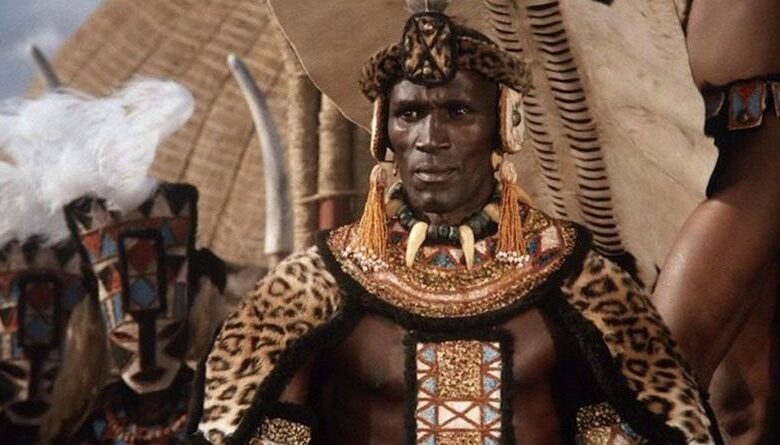
Sigidi kaSenzangakhona, more famously known as Shaka Zulu, was one of Africa’s greatest military leaders and state-builders. Born in the late 18th century, Shaka transformed the fragmented Nguni chiefdoms of southeastern Africa into the powerful Zulu Kingdom, which would go on to shape the history of southern Africa for decades. His reign, although brief, left a legacy of innovation, conquest, and controversy that continues to intrigue historians today.
Early Life of Shaka Zulu
Shaka was the son of Senzangakhona, a minor chief, and Nandi, the daughter of a Langeni leader. Their union was not recognized under customary law, and Shaka’s legitimacy was questioned from the moment of his birth. His very name is said to have come from his father’s dismissive claim that Nandi’s pregnancy was merely an ailment caused by the iShaka beetle (South African History Online).
Rejected by his father and subjected to ridicule as a boy, Shaka grew up in hardship. He and his mother found refuge among the Mthethwa people, ruled by Chief Dingiswayo. Here, Shaka discovered his natural gifts for leadership, physical endurance, and strategy. By his early twenties, he had risen through the ranks of the Mthethwa army, where he earned the name Nodumehlezi (“the one who causes the earth to tremble”).
Shaka’s Rise to Power
When Chief Dingiswayo was killed around 1818 during conflict with the Ndwandwe under Zwide, the Mthethwa state collapsed. Shaka seized the opportunity to assert his leadership, uniting the remnants of the Mthethwa with his own followers. Through a combination of military brilliance and political cunning, he consolidated power and began expanding Zulu territory at an unprecedented scale.
One of his most famous victories came in 1818 at the Battle of the Mhlathuze River, where he decisively defeated Zwide’s forces. This triumph not only secured the survival of the Zulu Kingdom but also cemented Shaka’s reputation as an invincible commander.
Military Innovations of Shaka Zulu
Shaka revolutionized African warfare. Rejecting the long throwing spear (assegai), he introduced the short stabbing spear (iklwa), designed for close combat. Warriors were equipped with large cowhide shields and trained to fight in disciplined formations, most famously the “bull horn” formation, which surrounded and crushed enemy forces.
He also imposed rigorous discipline:
-
Warriors ran barefoot across thorny ground to harden their feet.
-
Cowards or deserters were executed to maintain strict order.
-
Campaigns became annual, ensuring constant military readiness.
This militarization created a professional fighting force that dominated southern Africa and terrified rival chiefdoms (Britannica).
Also Read: The San People Africa: World’s Most Ancient Race
Shaka’s Rule and Expansion
During his decade-long reign (c. 1818–1828), Shaka expanded Zulu dominance across KwaZulu-Natal and beyond. Conquests displaced thousands of people, leading to the Mfecane (or Difaqane) — a period of mass migrations, state-building, and upheaval across southern Africa. Refugees fled northwards, founding new kingdoms such as the Ngoni in Tanzania and Gaza in Mozambique (Oxford Reference).
Despite his success, Shaka ruled with brutality. Chiefs who resisted were crushed, cattle seized, and entire communities destroyed. Oral traditions claim his wars may have caused the deaths of hundreds of thousands, though historians debate these numbers.
Royal Women and Governance
Shaka relied on royal women, often his cousins, to oversee villages and play important administrative roles. Yet, he never took a wife or produced a legitimate heir. Women rumored to be pregnant by him were executed — a reflection of his suspicion and the authoritarian nature of his rule.
Despite his success, Shaka ruled with brutality. Chiefs who resisted were crushed, cattle seized, and entire communities destroyed. Oral traditions claim his wars may have caused the deaths of hundreds of thousands, though historians debate these numbers.
Also Read: Zulu Tribe of South Africa
Royal Women and Governance
Shaka relied on royal women, often his cousins, to oversee villages and play important administrative roles. Yet, he never took a wife or produced a legitimate heir. Women rumored to be pregnant by him were executed — a reflection of his suspicion and the authoritarian nature of his rule.
The Assassination of Shaka Zulu
On September 22, 1828, Shaka was assassinated by his half-brothers Dingane and Mhlangana, with the help of his bodyguard Mbopha. His final words reportedly warned that his killers would soon turn against one another and that the arrival of Europeans (“the swallow”) would bring further upheaval.
Buried in an unmarked grave near Dukuza, Shaka left behind no heir. Dingane succeeded him, but the Zulu Kingdom would face new challenges from both within and from the expanding British Empire (History Today).
Legacy of Shaka Zulu
Shaka’s impact on African history is profound:
-
State-Building: He transformed a minor chiefdom into a centralized kingdom.
-
Military Genius: His tactics are studied even today as models of strategic warfare.
-
Cultural Transformation: His reign created both pride and trauma — pride in Zulu unity and trauma from the devastation of his campaigns.
-
Colonial Encounters: Under his successors, the Zulu would later clash with the British in the famous Anglo-Zulu War of 1879.
While historians debate whether Shaka was a tyrant or visionary, his ability to forge a powerful state in the face of enormous odds remains undeniable. Today, he is remembered as both a symbol of Zulu identity and one of Africa’s greatest rulers.